
Flat Roof Repair
Flat roof repair patches torn and bruised membrane, rebuilds lifted flashing, and replaces soaked boards.
Flat Roof Repair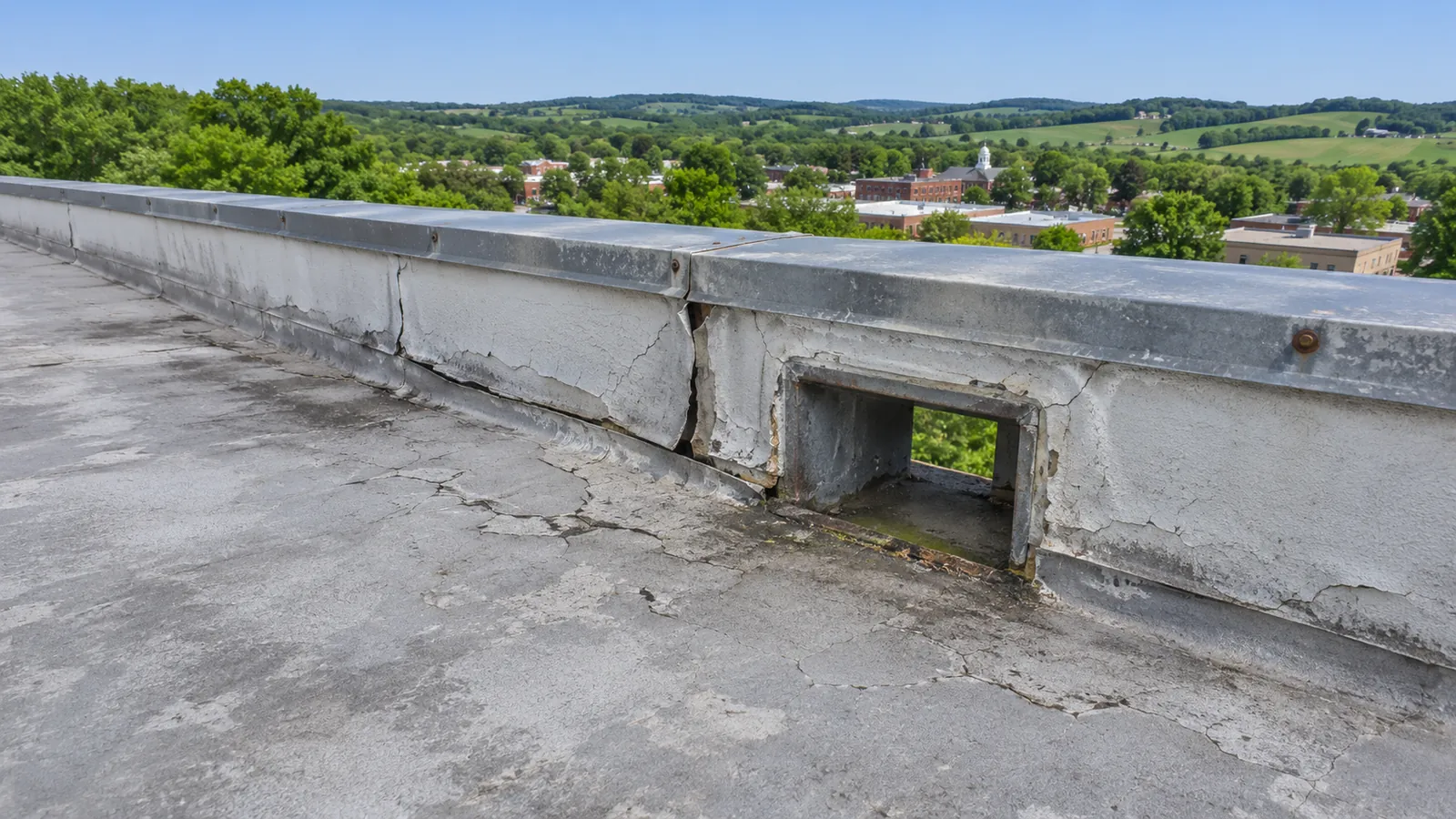
We provide Carlisle commercial roof repair after storms, from lifted edge metal and torn membrane to wet deck sections that need state-reviewed replacement.
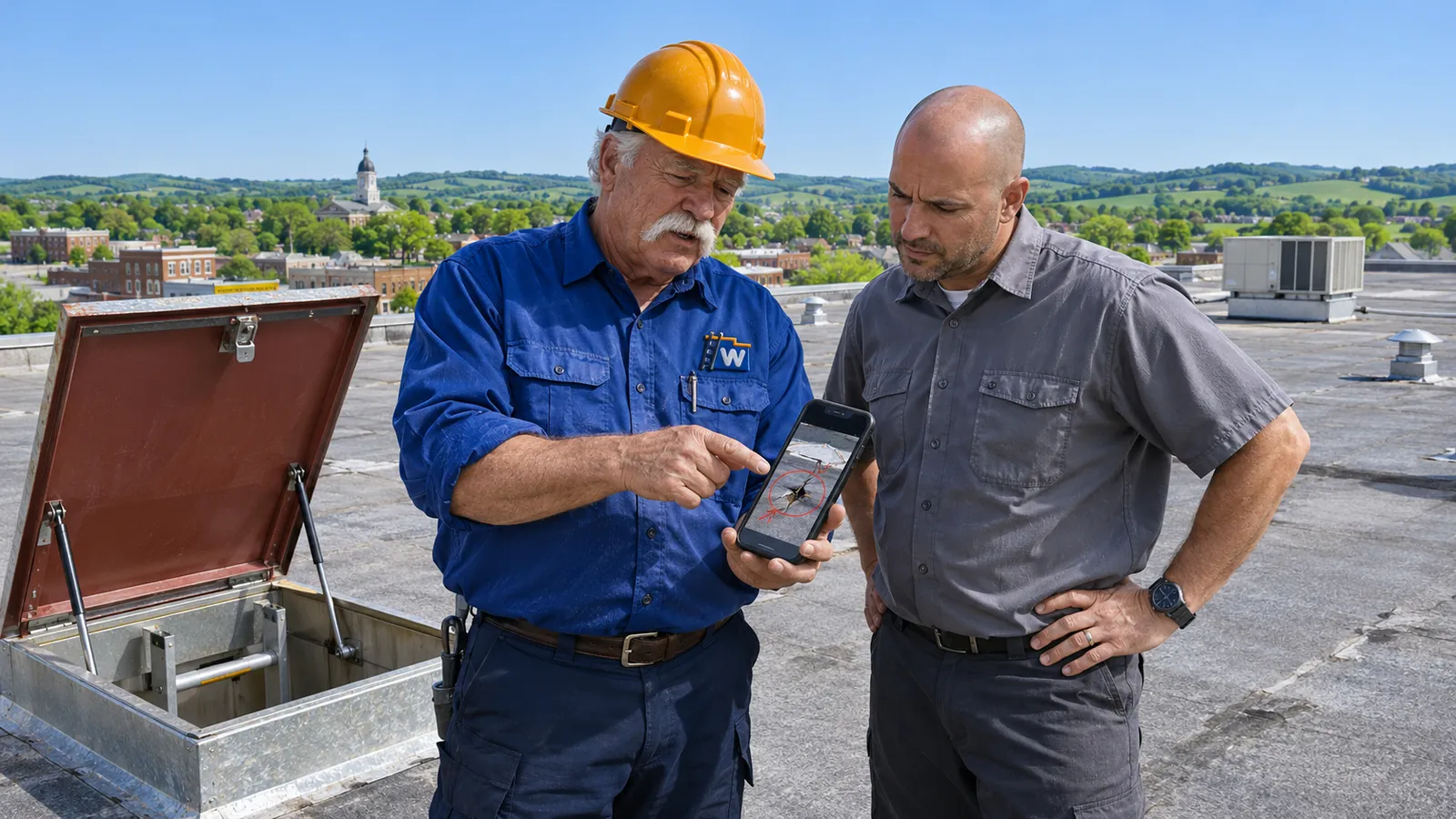
Carlisle commercial roof repair after a storm starts from the ground: bent edge metal, lifted ridge caps, debris at drains, and new stains inside. Dated photos of each spot come before anything gets cleaned up.
Repairs that need a permit go through the Kentucky HBC, and the Nicholas County sheet assigns state inspectors for building, wiring, HVAC, and plumbing. Storm work that includes deck replacement or new curbs falls under that review.
Storm damage shows from the ground, from inside, and on the roof. Each row pairs what you notice with what it means.
Banging or flapping at the roof edge in wind.
Coping or gravel stop has pulled loose, opening the membrane edge to wind and rain.
New drips in the middle of the building after a storm.
Wind or flying debris has torn the sheet, or a lifted section has split along a seam.
Leaks that start weeks after a hailstorm.
Hail cracked or bruised the membrane and crushed the insulation, and the damage opens slowly.
Sagging or stained ceiling over one bay.
Water entered at the tear and soaked the insulation, and the steel deck below has started to rust.
Water and broken plastic on the floor under a skylight.
Hail cracked or holed the skylight panel, or wind loosened its curb flashing.
Stopping active leaks right after a storm keeps water from spreading into the insulation and deck.
Resetting or replacing lifted edge metal keeps the next wind from peeling back more membrane from the roof edge.
Patching a tear right away limits how many insulation boards soak through before the deck starts to rust.
Dated photos, storm dates, and repair invoices give the insurer a clean record of what happened and what was fixed.
Core samples after hail show crushed insulation under the membrane that a quick look would miss.
Every service reaches Carlisle. Storm work usually leads to these repairs.
Flat roof repair patches torn and bruised membrane, rebuilds lifted flashing, and replaces soaked boards.
Flat Roof Repair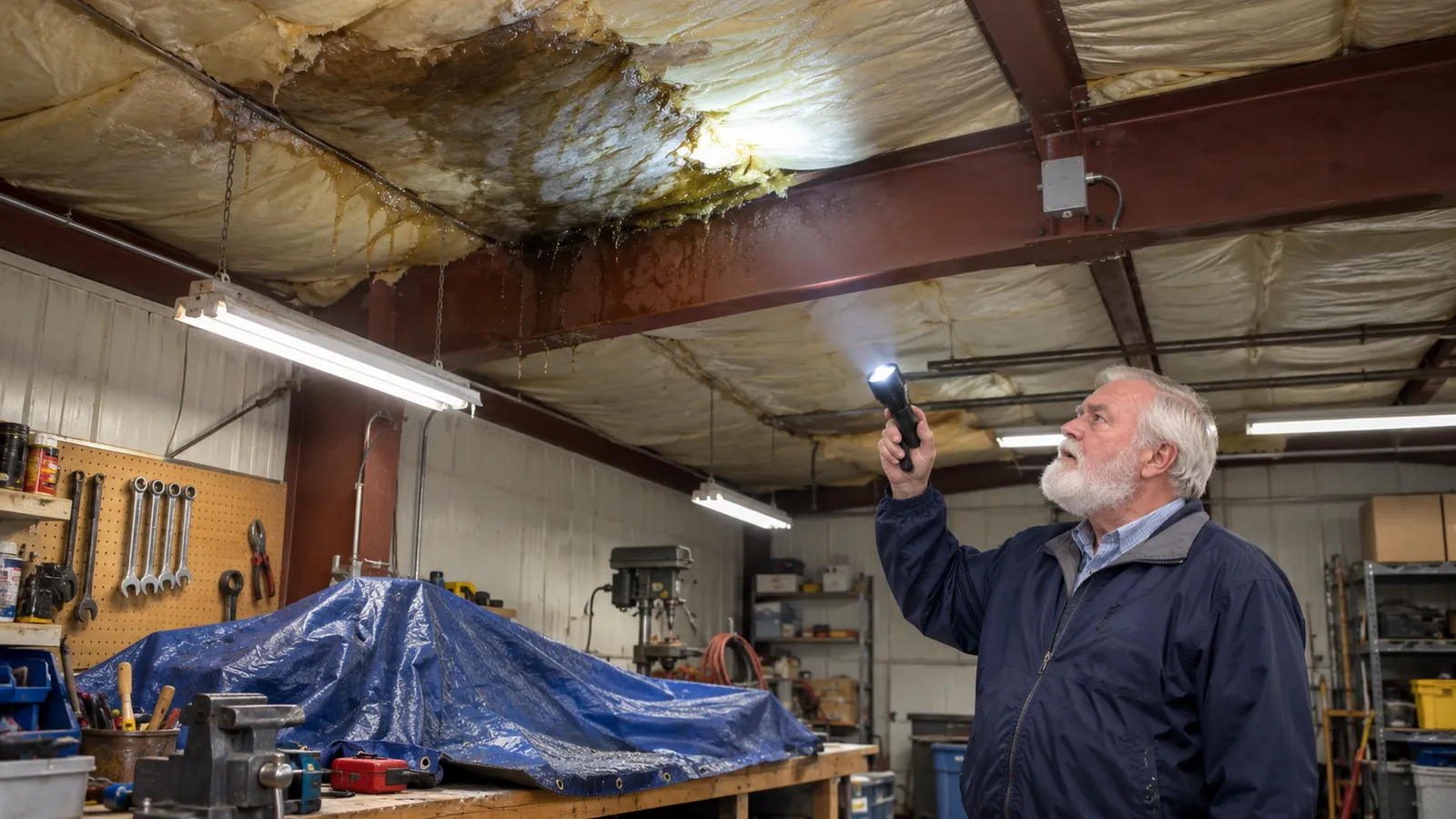
Leak tracing finds every opening a storm made, including the ones that only drip days later.
Commercial Roof Leak Repair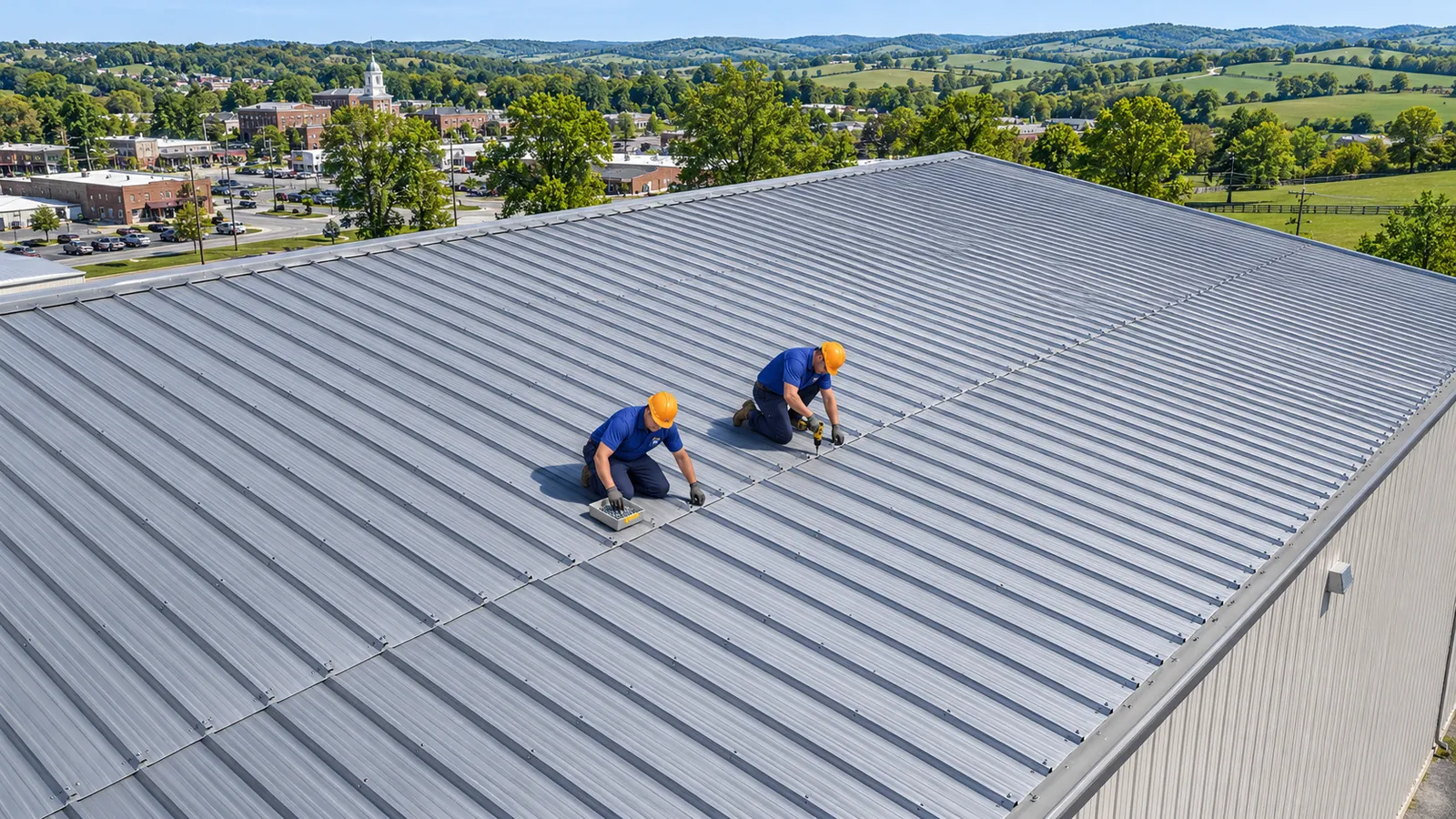
Metal roof repair resets lifted ridge caps and trim and replaces dented or holed panels.
Commercial Metal Roof Repair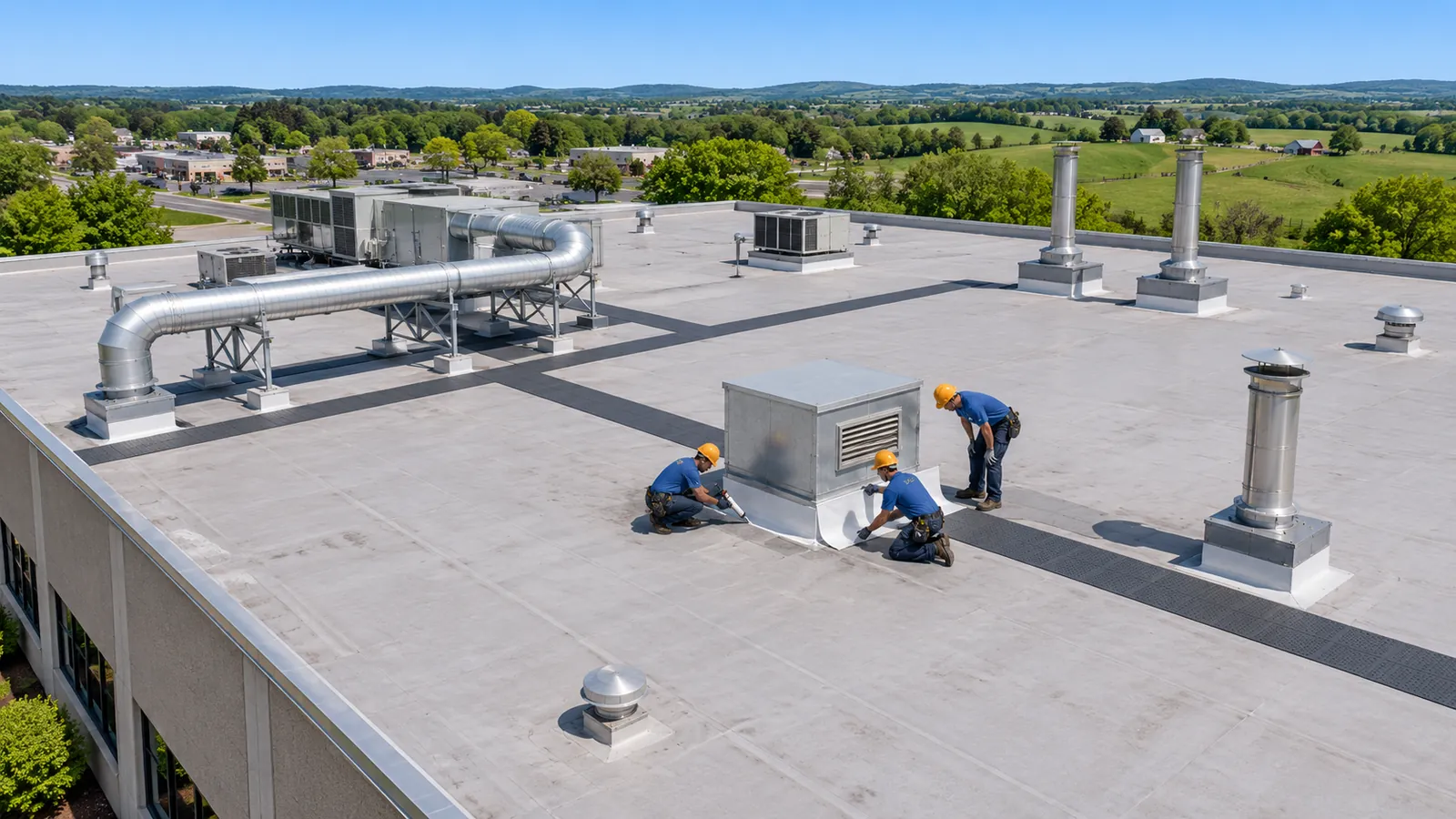
Industrial repair covers hail checks and storm repairs on larger plant roofs with skylights and units.
Industrial Roof RepairTake dated pictures of every damaged spot before anything gets cleaned up. Then call us to walk the roof.
Storm repairs stop active water first, then fix the damage in the right order.
We walk the whole roof, checking edges, seams, skylights, units, and the membrane field, and photograph each damaged spot with the date.
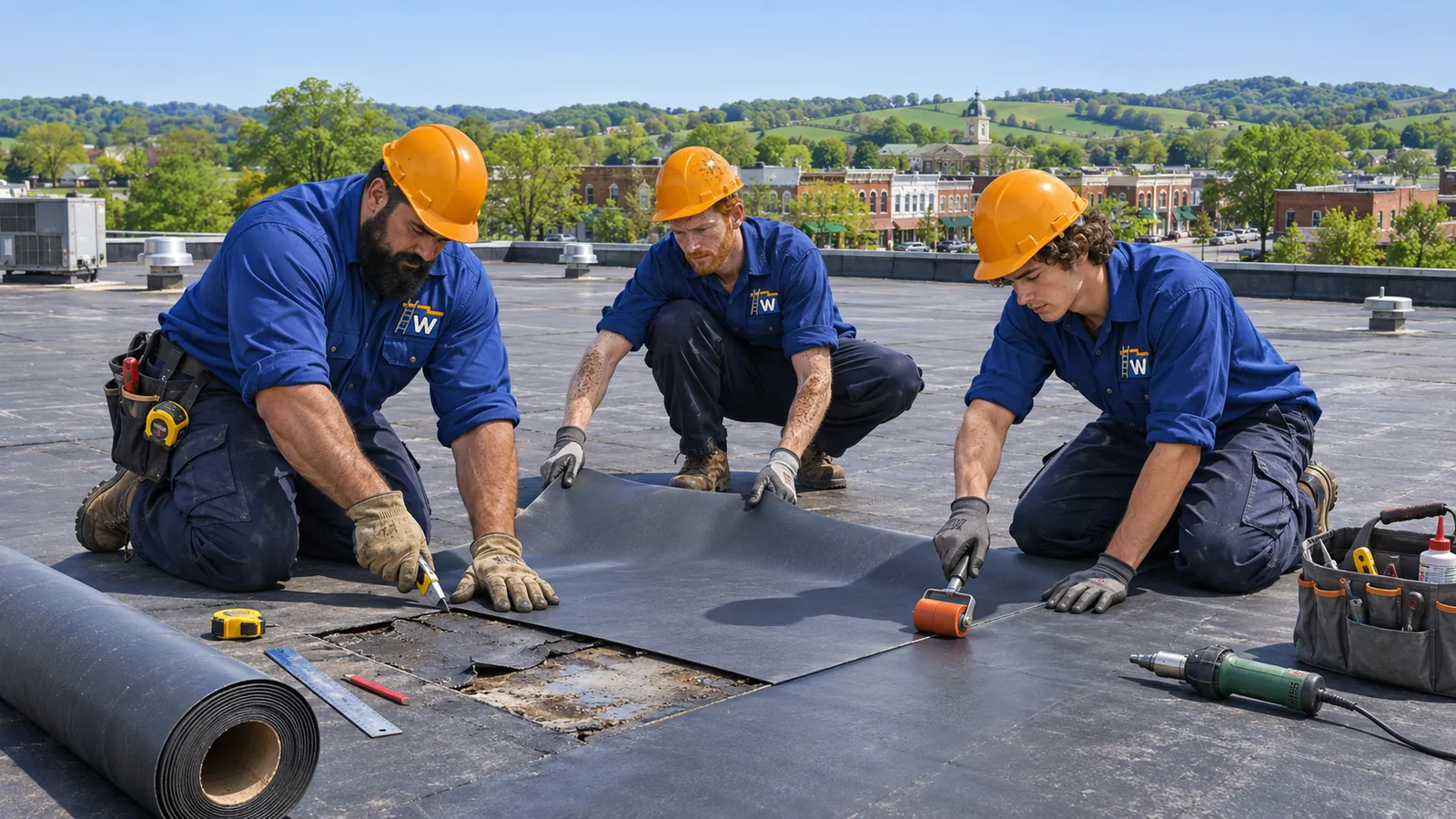
Openings that are leaking now get a temporary seal so the building stays dry while the permanent repair is planned.
Moisture readings and core samples show how far water and hail damage spread into the insulation and deck.
Deck replacement or new curbs get described in writing for the state office before that part of the work begins.
Edge metal, membrane patches, flashing, and skylight panels get replaced with matching materials, and soaked boards come out.
Outside Carlisle and wondering about coverage? Call us or send us a message. Repairs also run in these towns.
Home base for roof repair, with city and county permits.
Unit curbs, gaskets, and vent boots coordinated with HVAC trades.
Rusted laps and purlins on metal buildings, state review.
Mast boot and conduit leaks, city or county electrical.
Eave walls, mast boots, and gutters on metal shops.
What Carlisle owners ask after a storm hits the roof.
Repairs that need a permit go through the Kentucky HBC, and the Nicholas County sheet assigns state inspectors for building, wiring, HVAC, and plumbing.
Storm repairs that include deck replacement or new curbs fall under that review. Electrical inspection follows the city or County Judge Executive depending on location. Keep photos and a short repair description ready for the call.
Yes, stopping active water first keeps it from spreading into the insulation and deck.
Roof cement, repair tape, or a tarp holds for now. On single-ply roofs, the cement residue has to be cleaned off later before a matching patch can bond, so keep the temporary area small.
Dated photos, the storm date, and notes on when leaks started help most.
Add any NWS warning for the area, invoices for temporary repairs, and inspection reports showing hail marks or lifted flashing. Check your policy terms with the insurer, and keep repairs that stop active leaks moving.
Often yes, when the metal is straight and the membrane under it is intact.
Bent or kinked sections get replaced. The crew checks the nailer behind the edge for rot or loose fasteners, since a weak nailer is why many edges lift in the first place.
Hail damage can stay hidden for weeks before it starts leaking.
Bruised membrane and crushed insulation open slowly as the roof heats and cools. A walk after the storm, with core samples where hail marks show, finds that damage before it reaches the ceiling.
Tell us when the storm hit and what you see from the ground. We walk the roof, document the damage, and explain the repairs.
Leave a name and number and we will call you about the leak or repair.
Or call now: +1 (606) 221-9220