
Commercial Roof Leak Repair
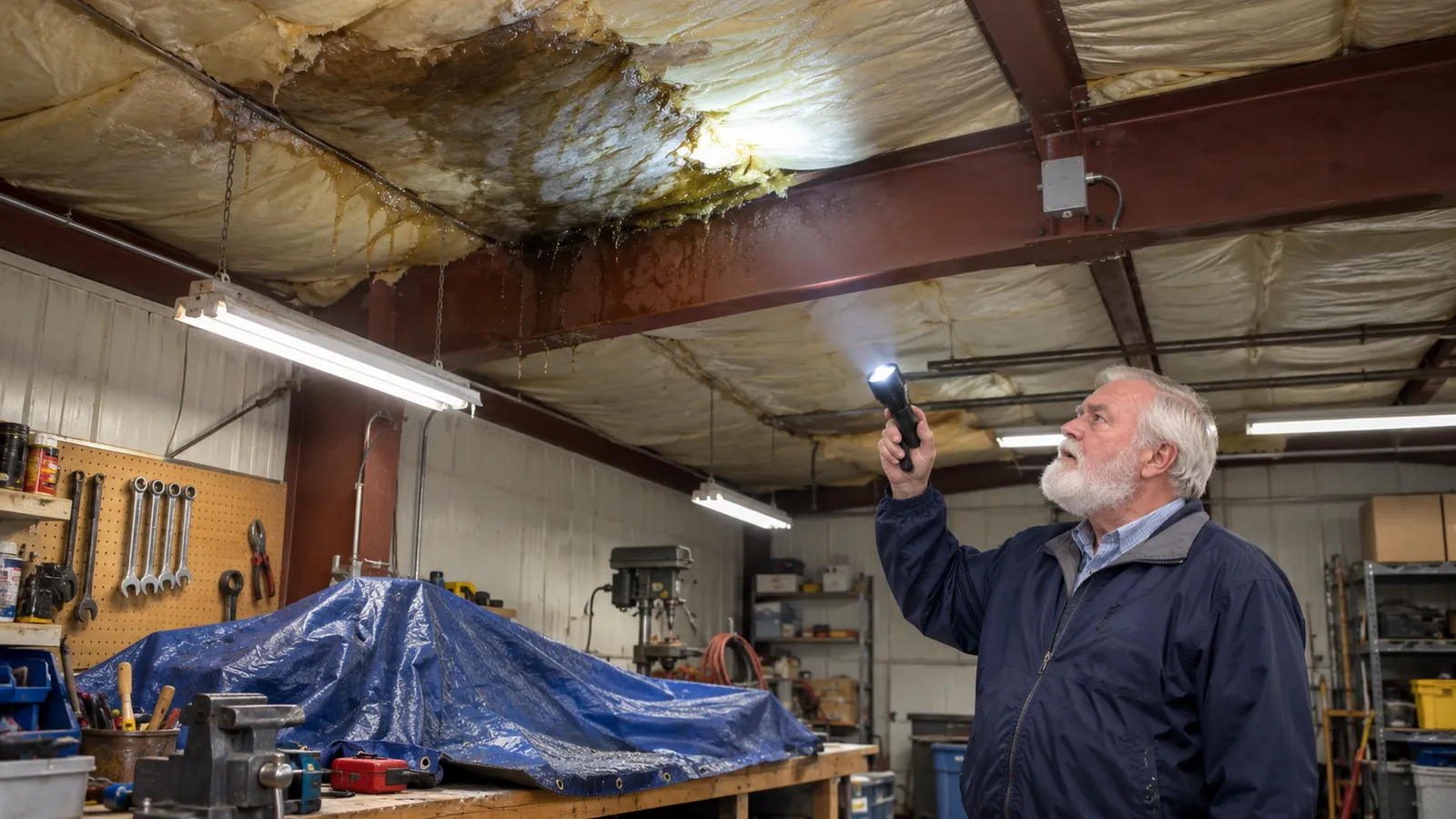
Stains far from any seam point to leak repair, since water travels along steel deck flutes before it drips.
Commercial Roof Leak Repair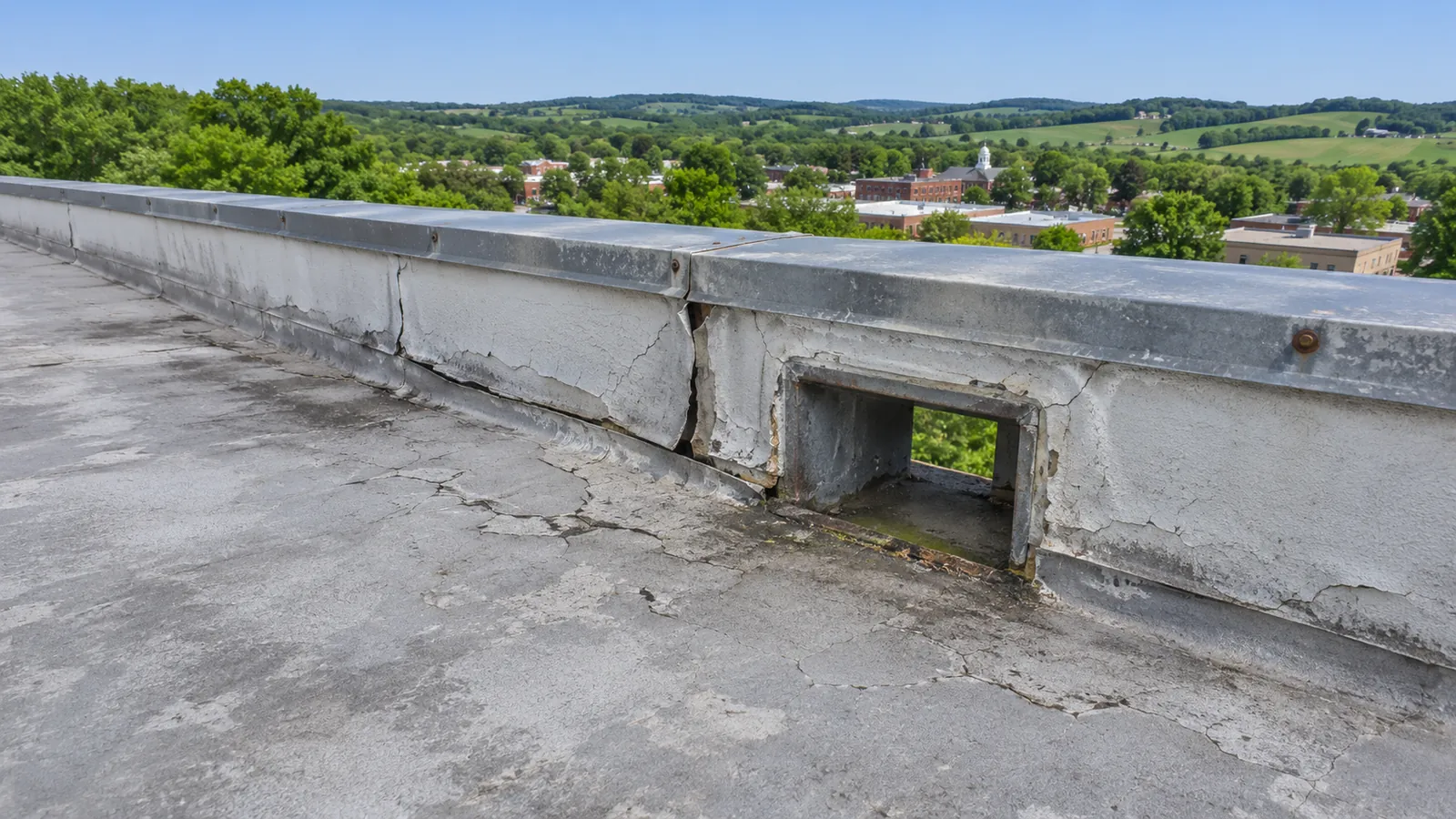
We are a Winchester commercial flat roof repair crew for TPO, EPDM, PVC, modified bitumen, and gravel roofs, fixing seams, blisters, punctures, and drains.
Winchester commercial flat roof repair works when damage stays in spots and the insulation below stays dry. These conditions show where repair ends.
| Roof Condition | Repair | Restore | Replace |
|---|---|---|---|
| One open seam on a TPO or EPDM roll | Usually Fits | Rarely | Rarely |
| Puncture with a dry board around it | Usually Fits | Rarely | Rarely |
| Small dry blisters on a built-up roof | Sometimes | Sometimes | Rarely |
| Seams opening across many rolls at once | Sometimes | Usually Fits | Sometimes |
| Patches clustered around the same drains and curbs | Sometimes | Usually Fits | Sometimes |
| Soaked insulation spreading across the field | Rarely | Rarely | Usually Fits |
Seams failing on many rolls usually point to aging adhesive or weak original welds, so the whole roof gets checked before patching one lap at a time.
Flat roofs show trouble inside first. Here is what each condition looks like from the floor and from the roof.
Drips in a straight line overhead, often worst after wind.
The welded or taped lap has let go, usually at a corner or a T-joint where three sheets meet.
Sagging tiles away from walls, curbs, and seams.
Air or moisture has pushed built-up or modified bitumen plies apart into a raised bubble.
Stains near columns after storms that clear slowly.
Water sits for days at a clogged strainer, a sagging deck bay, crushed boards, or a drain set too high.
A single new drip under a path to a rooftop unit.
A dropped screw, an HVAC panel set on the roof, or hail has opened a hole in the sheet.
Old stains coming back beside an earlier repair.
Roof cement smeared on a single-ply sheet has let go and water runs under the residue.
Each flat roof repair matches the sheet already on the building, so the patch bonds and lasts as long as the roof around it.
| Repair | What It Fixes | Where It Fits |
|---|---|---|
| Hot-air seam reweld | Open laps on TPO and PVC, with a cover strip over the repair | Laps that are clean and dry enough to weld |
| Primer and seam tape | Open EPDM laps after old adhesive is scrubbed off | Rubber roofs with a sheet that still stretches |
| Cut-and-patch blister repair | Broken or large blisters on built-up and mod-bit roofs | Spots where the board below is dry |
| Drain and slope work | Ponding at strainers, sagging bays, and curbs | Low areas a cricket, fill, or new drain can correct |
| Rounded membrane patch | Punctures from tools, panels, and hail | Holes with dry insulation around them |
A flat roof repaired at the first open seam keeps the job small and the building dry.
Closing a lap the week it opens keeps water from spreading through the boards under the sheet, which is what turns patches into replacements.
Clearing a drain or adding a cricket stops water from sitting for days on laps and adds less weight to the deck.
Welded TPO patches and taped EPDM repairs bond to the original sheet, so the next inspection finds a repair instead of a mess to clean off.
Each patch gets photographed and logged, so you can see when repairs start clustering and plan restoration on your schedule.
Ponding that stays for days breaks down seams and adds weight to the deck. We find why it stays and fix the drain, slope, or boards.
Flat roof repairs follow the order the membrane needs to bond, from inspection through a check after rain.
We identify the membrane first, because TPO, EPDM, and built-up roofs each take different materials. Then the crew checks laps, curbs, and drains near the leak.
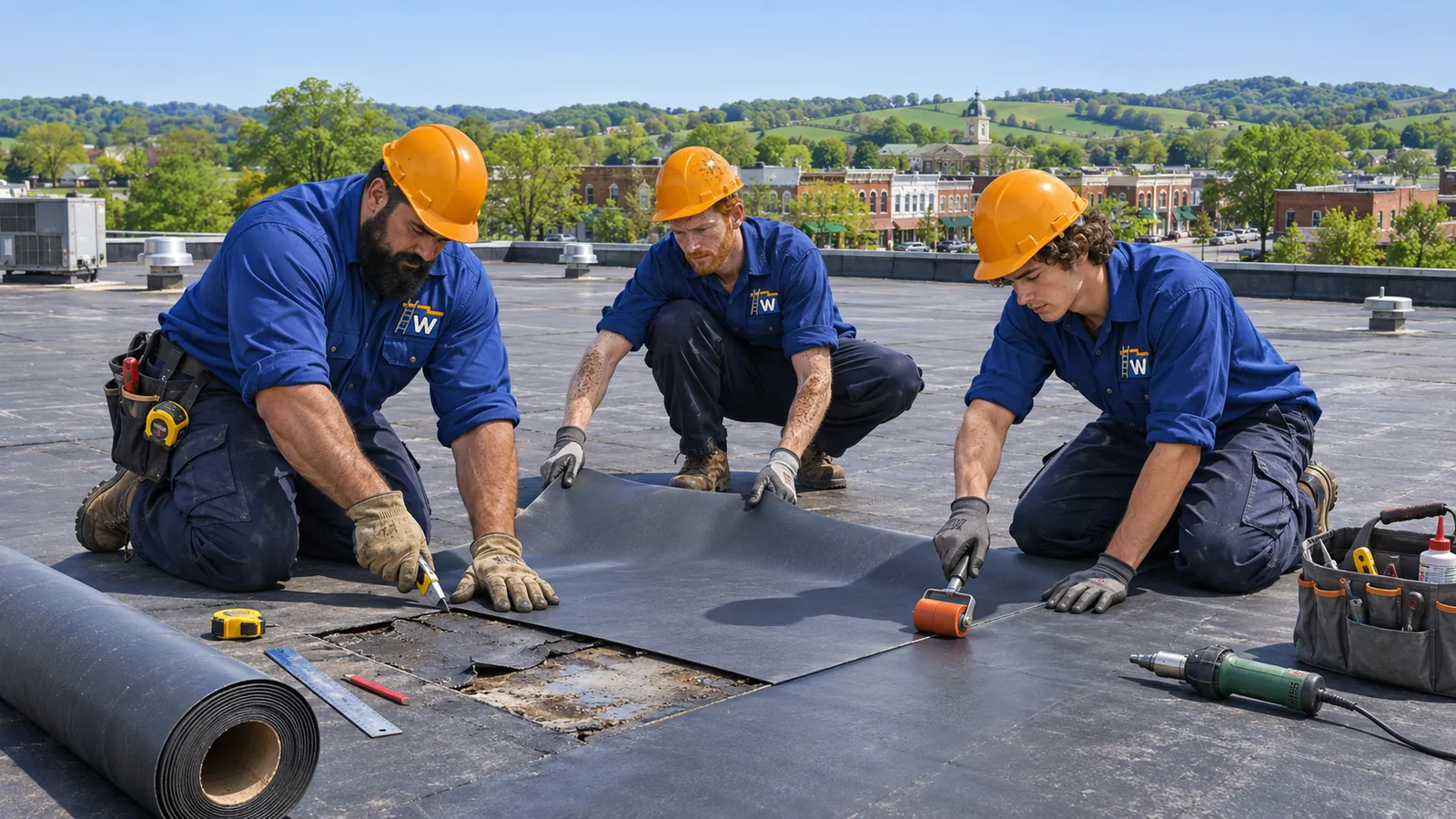
Seams near the problem get probed for open spots, and soft areas get moisture readings to see whether the boards below took on water.
Old adhesive, dirt, and any roof cement get scrubbed off, and the area is dried so the patch can bond to clean sheet.
TPO and PVC laps get rewelded with hot air, EPDM gets primer and tape with cover patches, and built-up spots get new plies.
After the next storm, the repair areas and nearby drains get checked to confirm water moves off the roof.
Flat roofs share buildings with metal sections, rooftop units, and plant equipment, so these repairs often come up on the same visit.
Stains far from any seam point to leak repair, since water travels along steel deck flutes before it drips.
Commercial Roof Leak Repair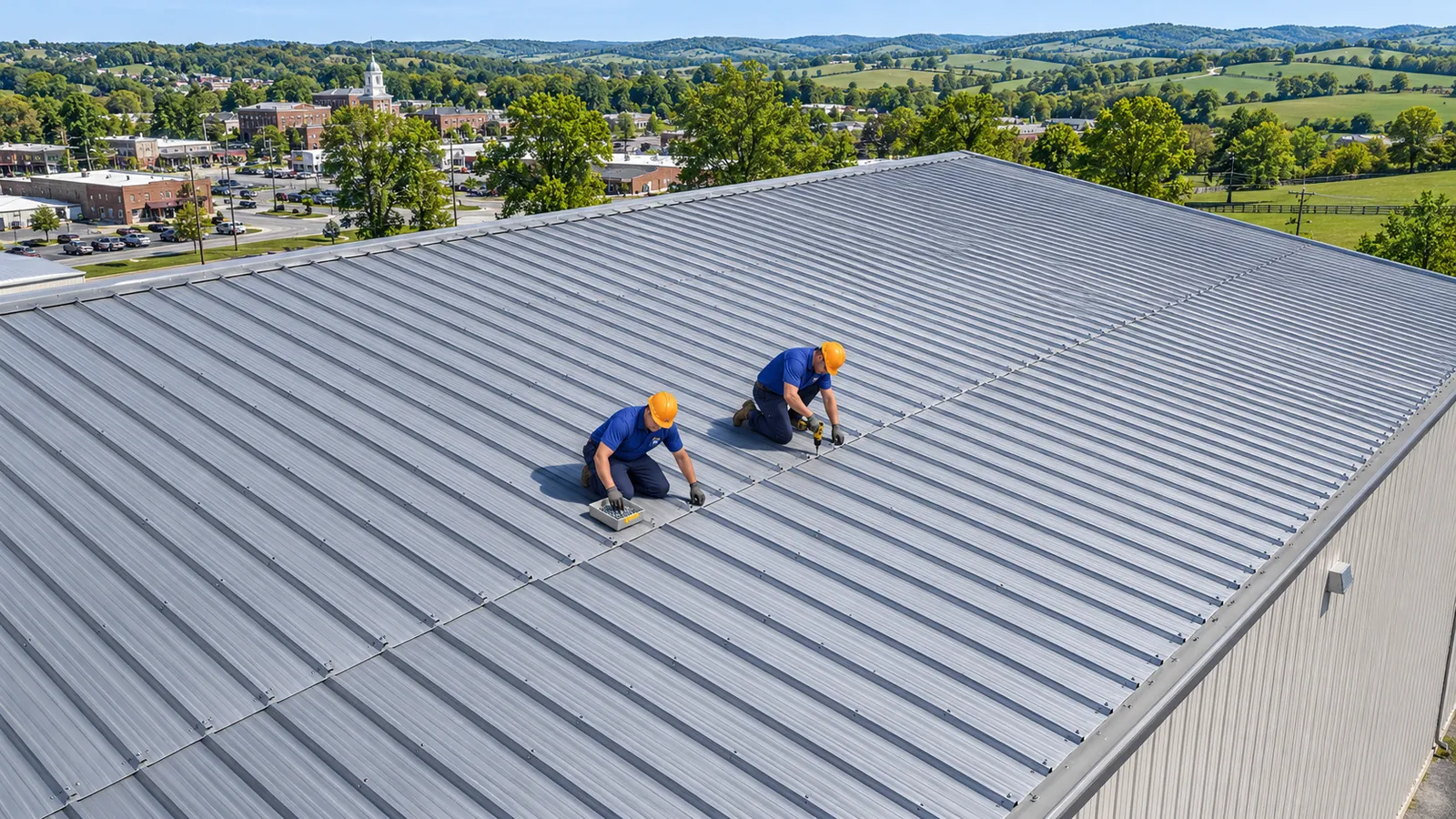
Where a flat section meets a metal roof along a wall, metal repair covers the leaking screws and laps.
Commercial Metal Roof Repair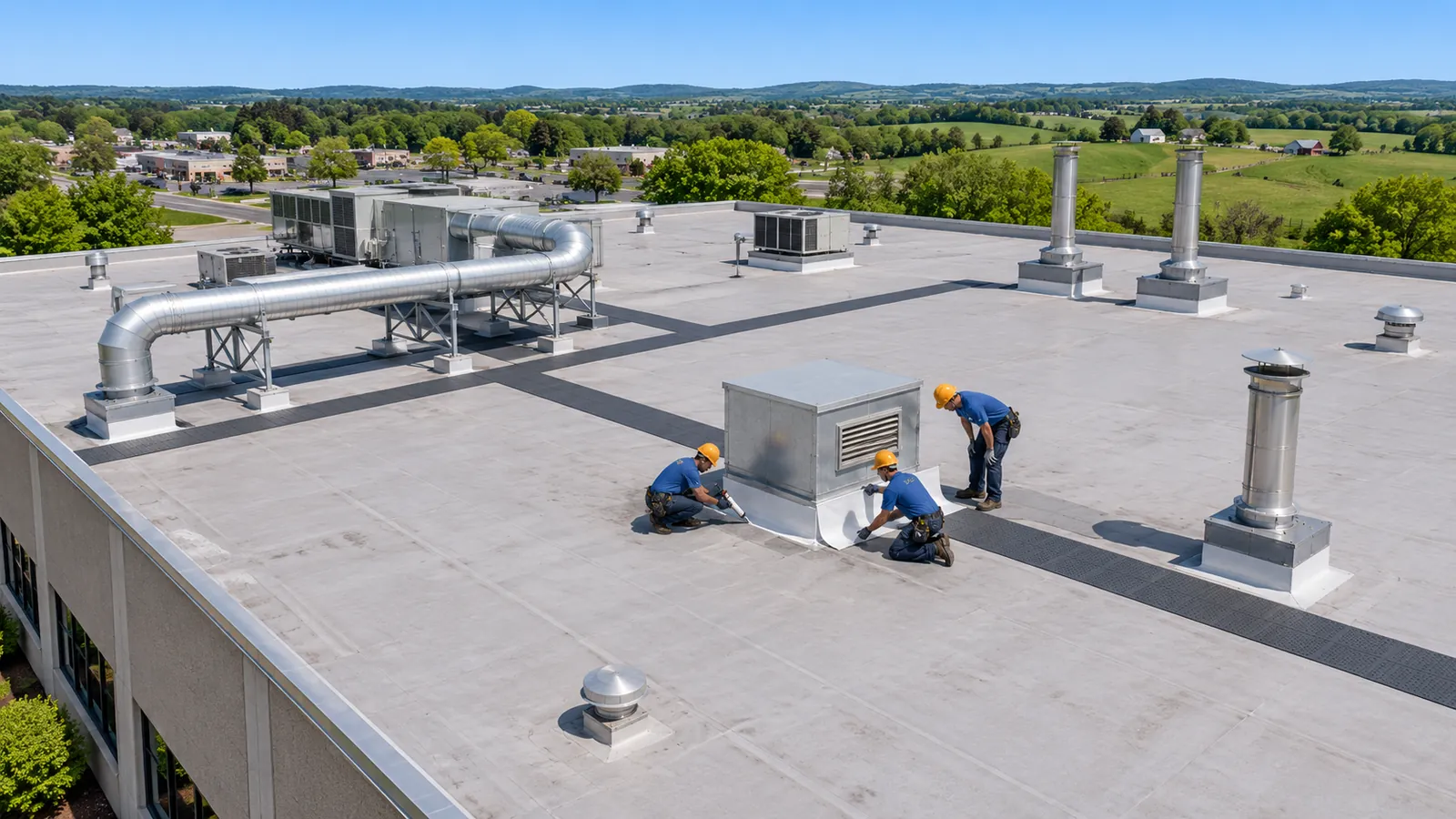
Exhaust fans and heavy foot traffic that soften or crush membrane around plant equipment call for industrial repair.
Industrial Roof RepairAnswers to the flat roof questions that come up most on repair visits.
Yes. The lap gets cleaned, dried, and rebonded with the method the membrane was built with.
TPO and PVC laps are rewelded with hot air, often with a cover strip on top. EPDM laps get scrubbed, primed, and fitted with new seam tape and cover patches at each end. Many open rolls at once calls for a full roof check first.
Small dry blisters are usually left and watched, while large or broken ones get cut out and patched.
The crew cuts the blister in an X, dries the area, checks the board below, bonds the flaps down, and covers it with a new ply or patch. A cluster of blisters calls for a moisture scan.
By finding why the water stays, then clearing the drain, adding slope, or adding a drain at the low spot.
A clogged strainer gets cleaned and reset, a sagging deck bay gets a structural check and tapered fill, crushed boards get replaced, and a missing cricket behind a curb gets built.
With a piece of matching membrane that runs past the hole on every side, sealed the same way as the seams.
Before patching, the crew checks for a soft spot around the hole, since that means wet insulation to cut out. TPO and PVC patches are rounded and welded; EPDM patches are primed and rolled on.
Repair stops making sense when patches cover a large share of the roof or new leaks keep opening between old ones.
Watch for patches clustering at the same drains and curbs, leaks moving after each storm, and spreading wet readings. A dry roof with a worn surface can be restored after repairs; widespread wet boards mean replacement.
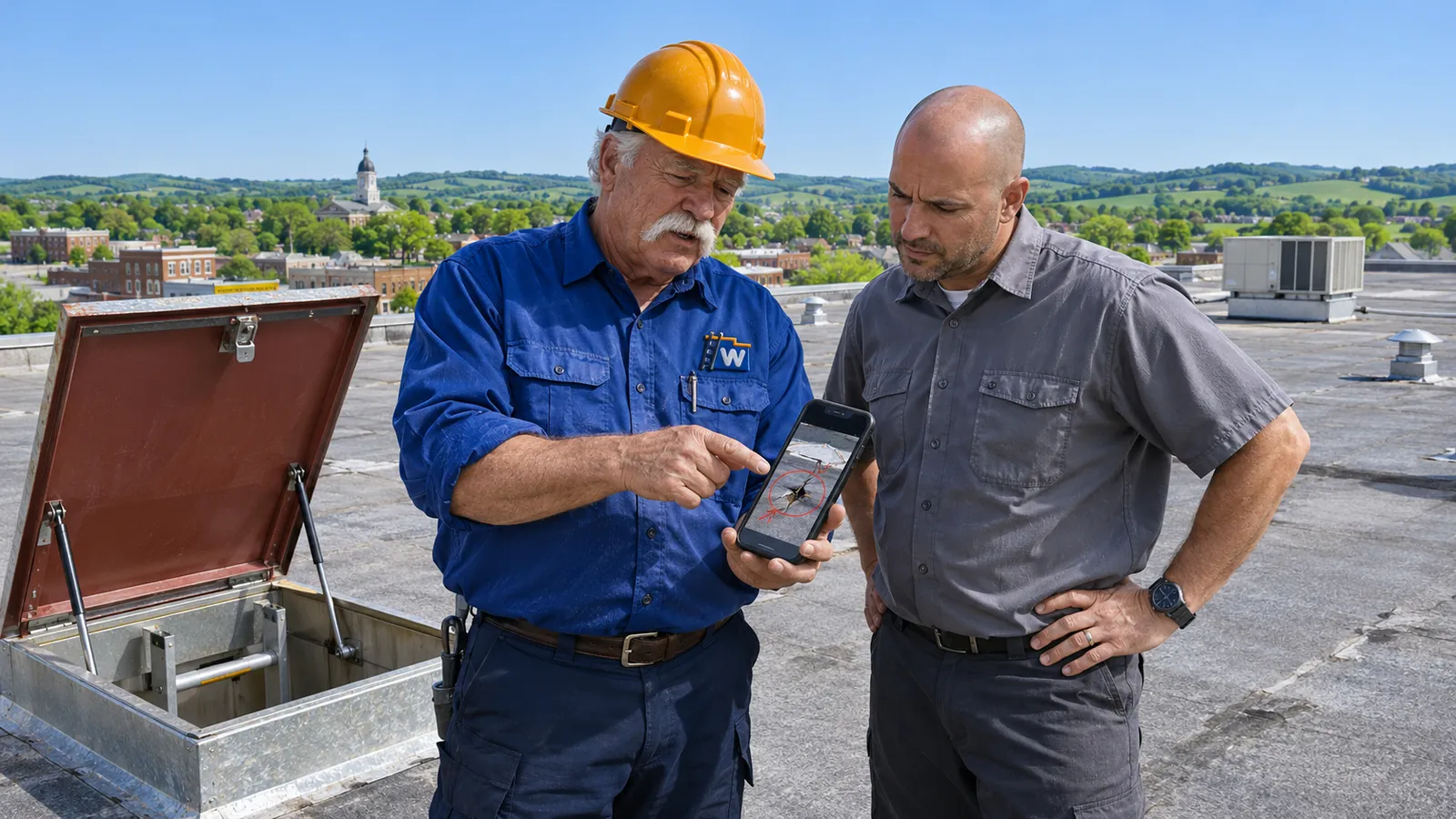
Tell us the roof type if you know it and where the water shows up. We inspect the laps, drains, and patches and explain the repair.
Leave a name and number and we will call you about the leak or repair.
Or call now: +1 (606) 221-9220