
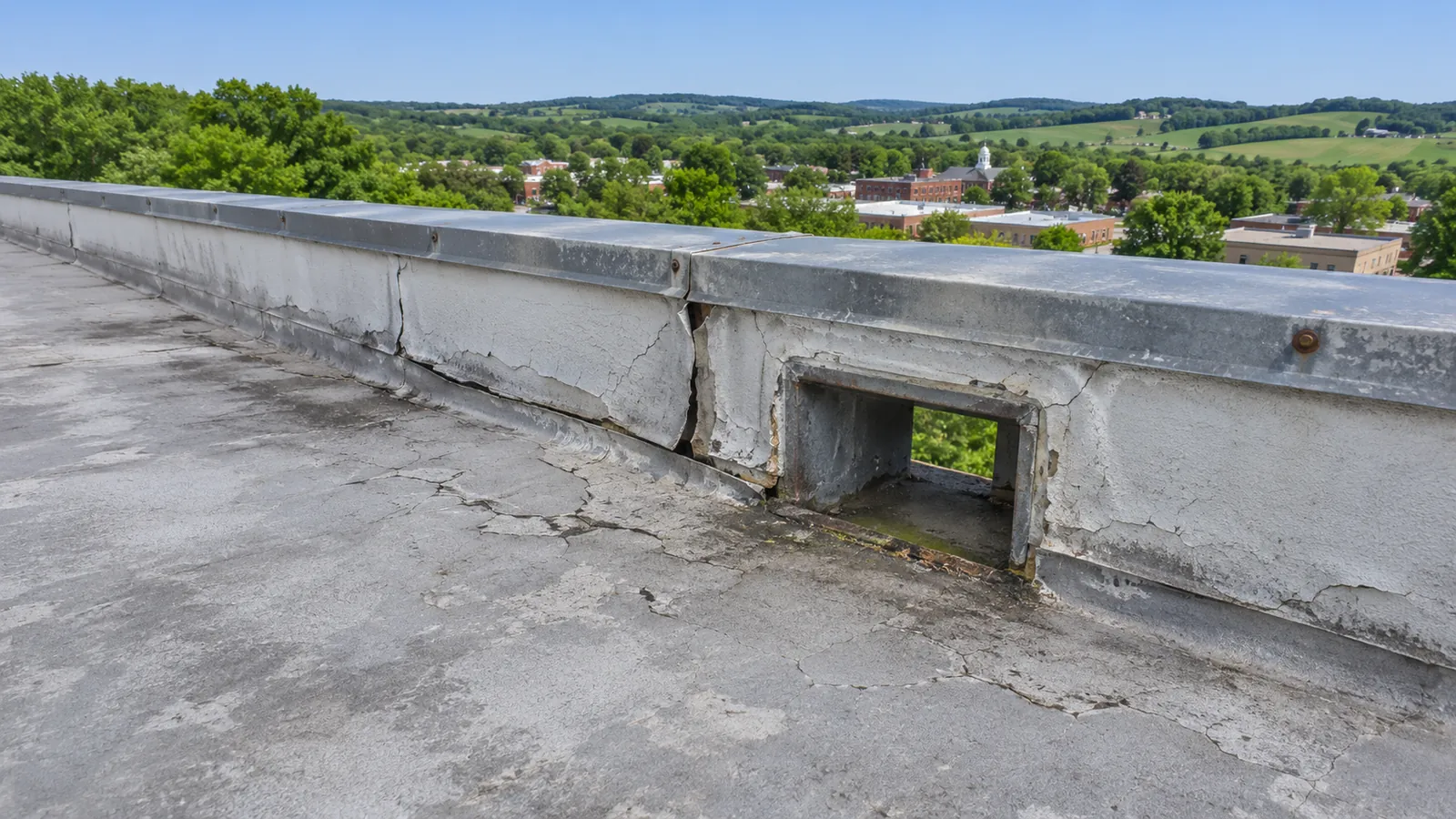
Flat Roof Repair
Membrane sections that meet your metal roof along a wall or over an office addition get flat roof repair.
Flat Roof Repair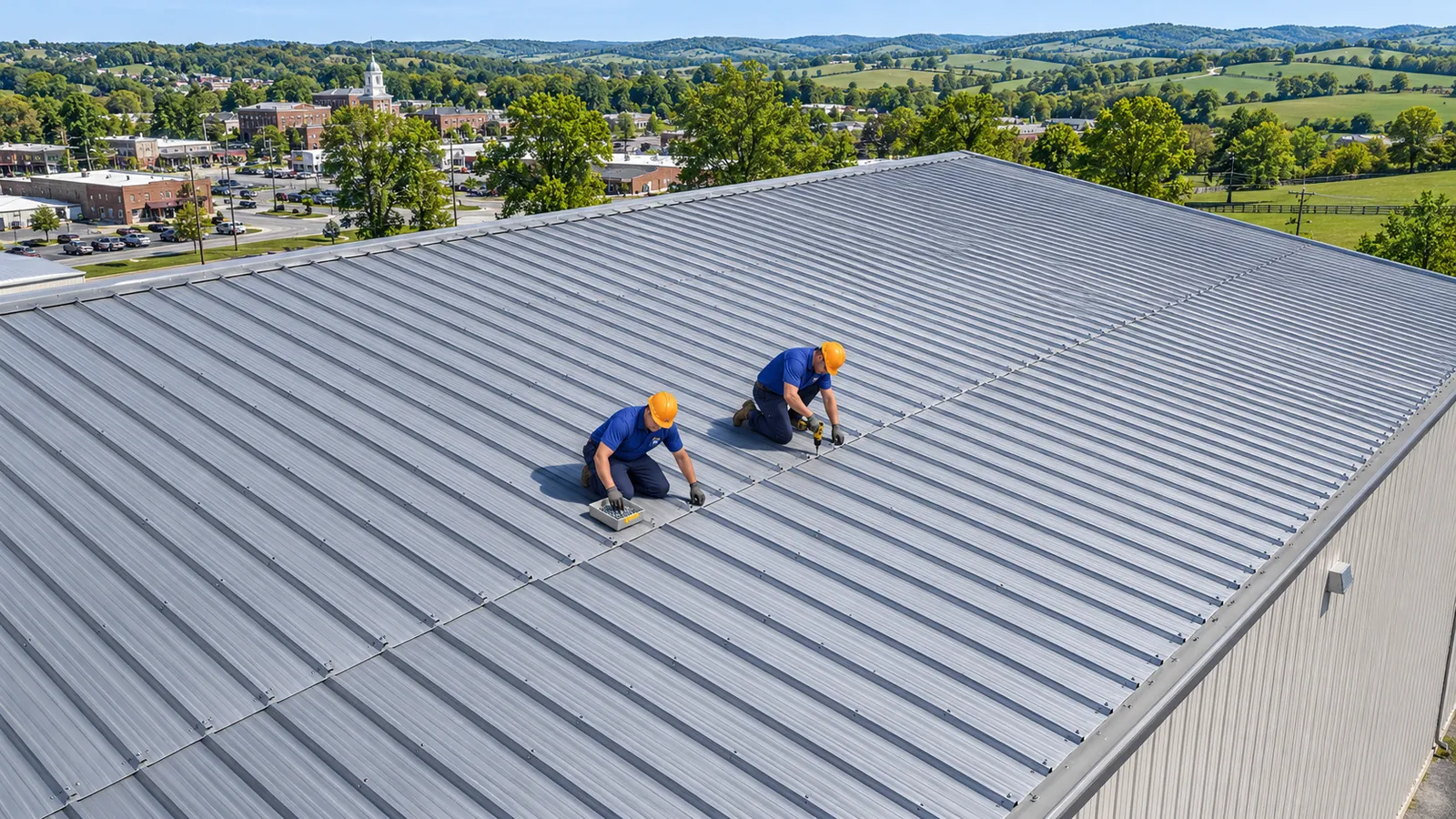
Our Winchester commercial metal roof repair work covers screw leaks, end laps, rusted panels, ridge caps, and gutters on shops, warehouses, and metal buildings.
Winchester commercial metal roof repair fits most leaks at screws and laps. The rows show where repair keeps working and where panels or framing need more.
| Roof Condition | Repair | Restore | Replace |
|---|---|---|---|
| Loose or missing screws along a few purlin lines | Usually Fits | Rarely | Rarely |
| Leaking end laps on a low-slope panel run | Usually Fits | Rarely | Rarely |
| Surface rust on firm steel near the eaves | Usually Fits | Sometimes | Rarely |
| Pitting along many laps across the roof | Sometimes | Usually Fits | Rarely |
| Holes rusted through several panels | Sometimes | Rarely | Sometimes |
| Purlins weakened by years of leaking laps | Rarely | Rarely | Usually Fits |
Purlin and framing repair is structural work, so it gets reviewed with the building office before any steel is replaced.
Metal roofs leak where parts meet. Each row pairs what shows up inside with the detail above it.
Drips in rows that match the purlin spacing overhead.
Rubber washers have hardened and cracked after years of sun, and water runs down the screw shank.
Leaks that start after big temperature swings.
Daily expansion of long panels has worked screws loose, most often near the eaves and the ridge.
A wet line across the building where two panels overlap.
Wind and capillary action draw water uphill into the lap, especially on low-slope runs.
Drips near the center of the building after wind-driven rain.
Closures under the ridge cap have shrunk or blown out, and the cap screws have backed out.
Water down an interior wall below a built-in gutter.
An open joint or rusted section in a gutter inside the roof line drains straight into the building.
Metal roof repairs replace worn parts with matching ones, so laps line up and fasteners hold in the purlins.
| Repair | What It Fixes | Where It Fits |
|---|---|---|
| Fastener replacement | Cracked washers, loose and missing screws | Every purlin line, worst near eaves and ridge |
| End lap reseal | Water drawn uphill into panel overlaps | Low-slope runs with laps that are still firm |
| Rust treatment | Surface rust on solid steel | Panels with no holes through the metal |
| Patch plate or panel swap | Holes and large rusted areas | R-panel roofs with matching profile and gauge |
| Gutter and valley repair | Open joints, rusted sections, overflow under trim | Hung and built-in gutters, valleys holding debris |
Fixing a metal roof at the fasteners and laps keeps water away from the purlins that hold it up.
New screws with fresh washers seal each hole again and hold the panels against daily expansion along every purlin.
Resealed laps stop water from sitting between panels, so the lower panel edge stops rusting through.
Purlins under a leaking lap rust and weaken over time, and a lap repair keeps the steel framing out of the water path.
Sealed gutter joints and checked downspouts keep water from backing under eave trim and into walls.
Backed-out screws and cracked washers let water in at every hole. We go row by row along each purlin and seal the line again.
Metal roof repairs start at the fasteners and work outward to laps, trim, and gutters.
We walk the panels along each purlin line, checking screws, washers, end laps, ridge caps, and gutters, and match leak spots inside to the rows above.
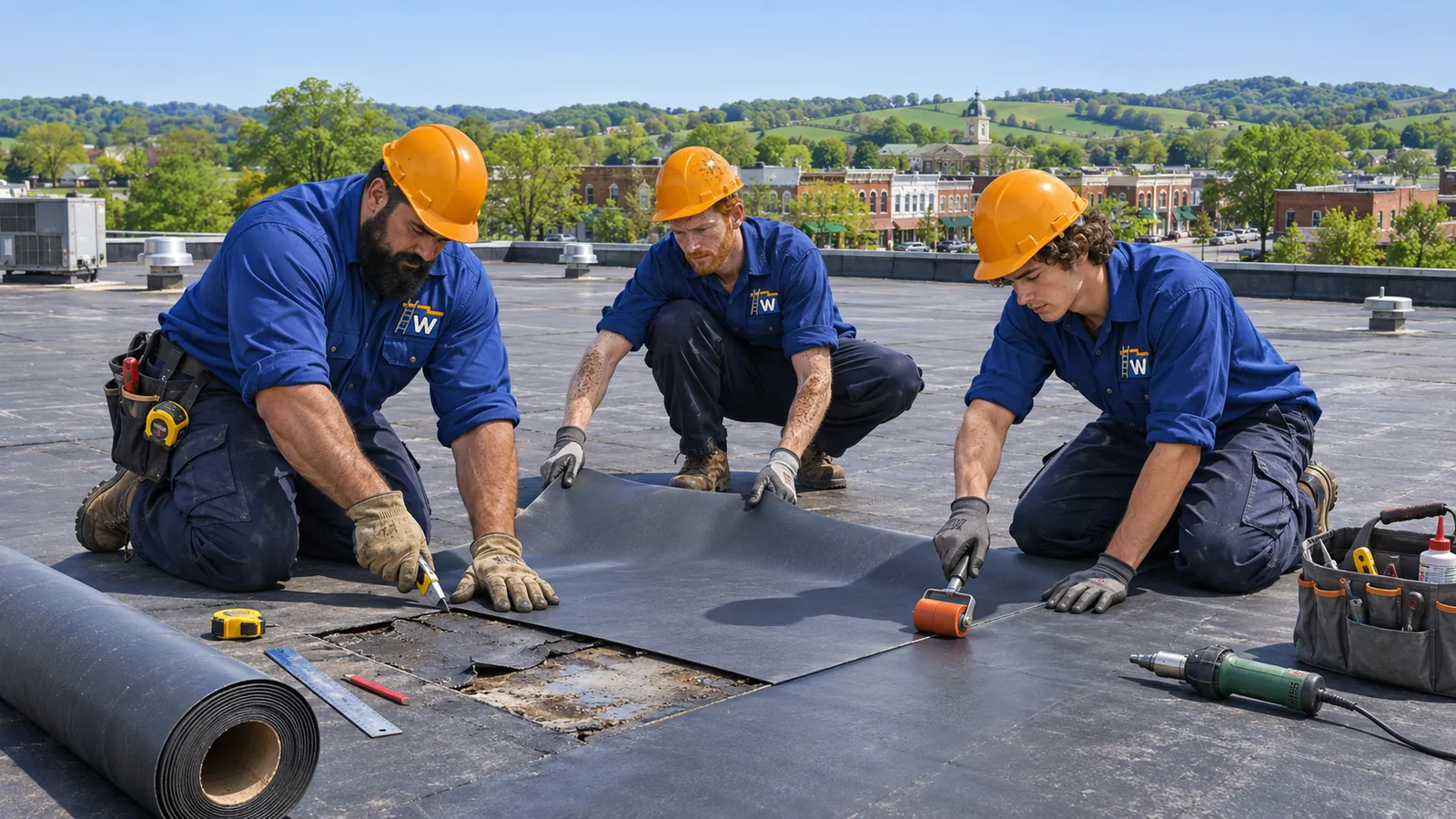
Loose, missing, and stripped screws get marked row by row, with the eave and ridge lines checked closest since they move the most.
Leaking end laps get opened or cleaned to firm metal, and rusted edges get wire-brushed and primed before any sealant goes in.
New butyl tape or sealant goes between the panels, laps get restitched, and stripped holes take oversized screws with new washers.
Panels rusted through get replaced by sliding a matching sheet under the upslope panel, then the ceiling under each lap gets checked after the next rain.
Metal buildings often carry a flat section, a plant roof, or a leak that travels before it drips.
Membrane sections that meet your metal roof along a wall or over an office addition get flat roof repair.
Flat Roof Repair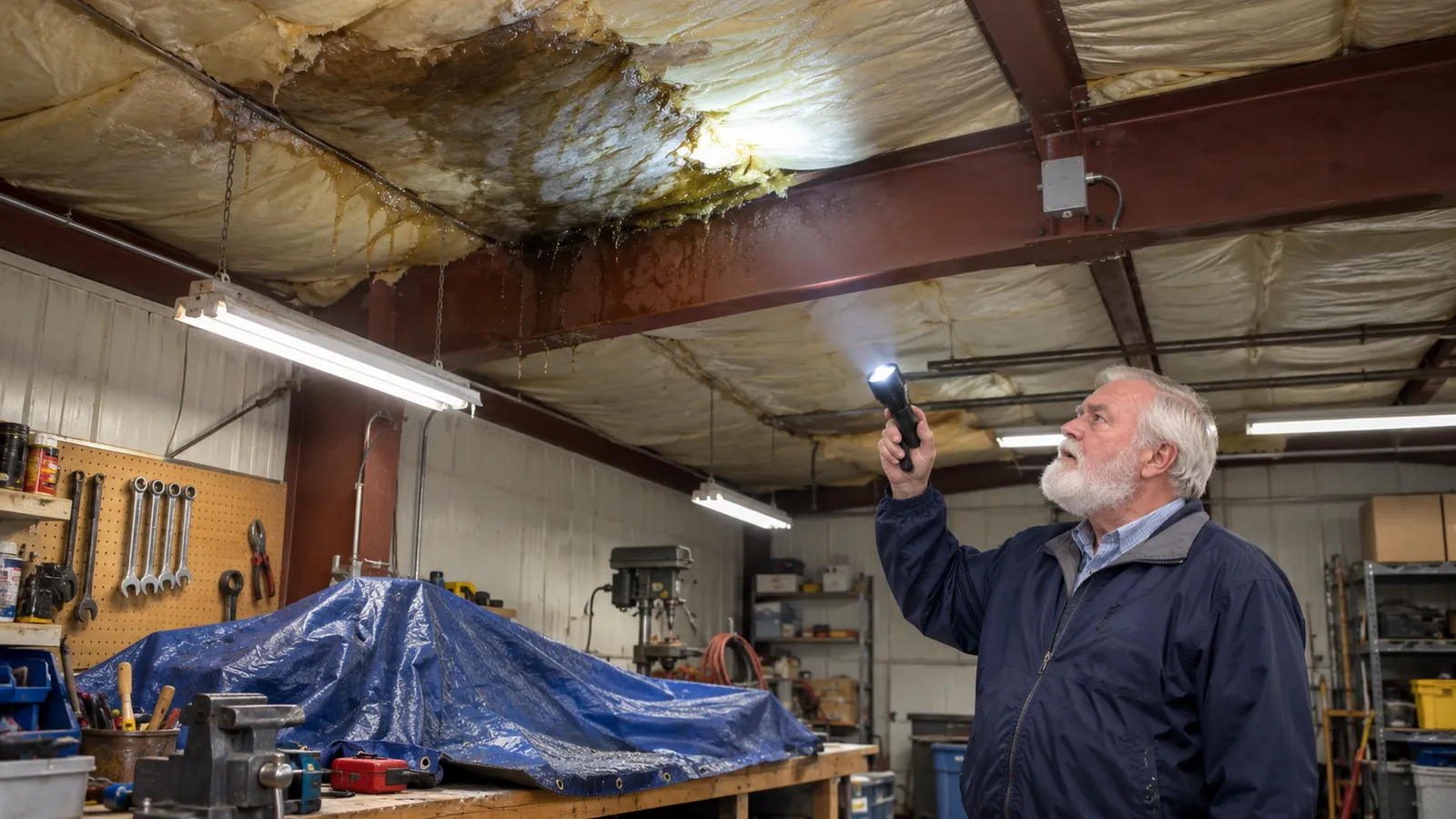
Water that follows a purlin to a low point and drips far from the opening calls for leak tracing.
Commercial Roof Leak Repair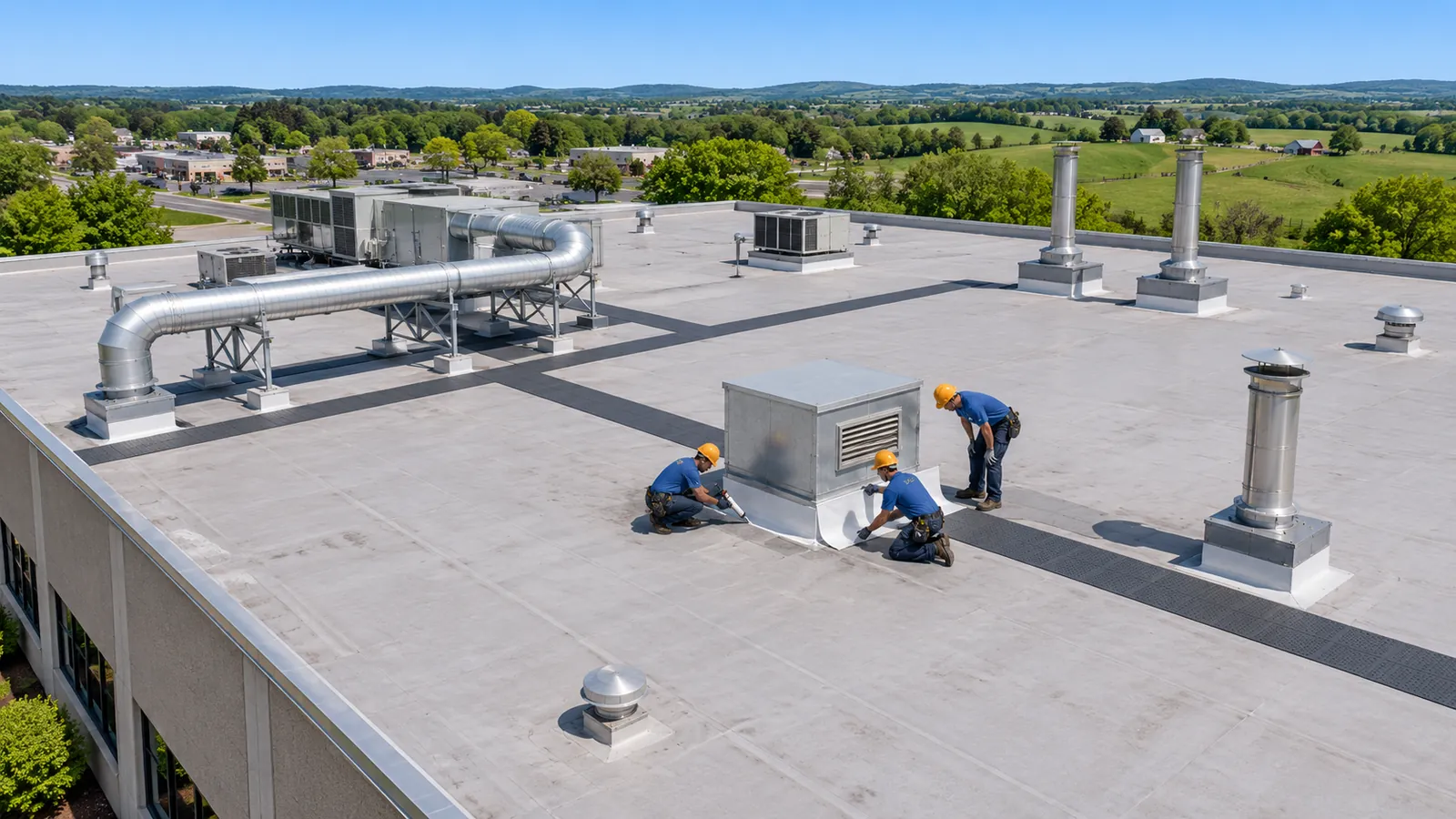
Plant roofs with process vents, exhaust fans, and pitch pans around steel get industrial repair.
Industrial Roof RepairWhat owners of metal buildings ask most about screws, laps, rust, and gutters.
Each leaking screw gets backed out and replaced with a new fastener and washer, one size larger where the hole has stripped.
Washers harden and crack in the sun, and panel expansion works screws loose from the purlins. Crews go row by row, tightening loose screws, adding missing ones, and checking the eave and ridge lines hardest.
The lap gets opened or cleaned, fresh butyl tape or sealant goes between the panels, and the lap is restitched with new fasteners.
Wind and capillary action pull water uphill into laps on long low-slope runs. Laps rusted at the lower edge are cleaned to firm metal, and rust-through there may need a short panel section replaced.
Surface rust on firm steel gets cleaned and treated; holes get a patch plate or a full panel swap.
Pitting along laps is cleaned, primed, sealed, and reinforced. Small holes take a patch plate with sealant and fasteners. Large rusted areas mean a new panel slid under the upslope sheet, matched in profile and gauge so the laps line up.
Debris comes out, open seams and joints get sealed, and sections rusted through get replaced.
Built-in gutters inside the roof line cause the most trouble, because a leak there drips straight into the building. Hung gutters leak mostly at end caps, joints, and downspout outlets. Valleys get cleaned and their flashing resealed or replaced.
Metal repairs center on fasteners, laps, and rust, while membrane repairs center on seams, punctures, and flashings.
Metal patches are plates or new panels sealed with butyl tape, and membrane patches are matching sheet welded or taped in. Buildings with both systems need crews comfortable with each, especially where metal meets a flat section along a wall.
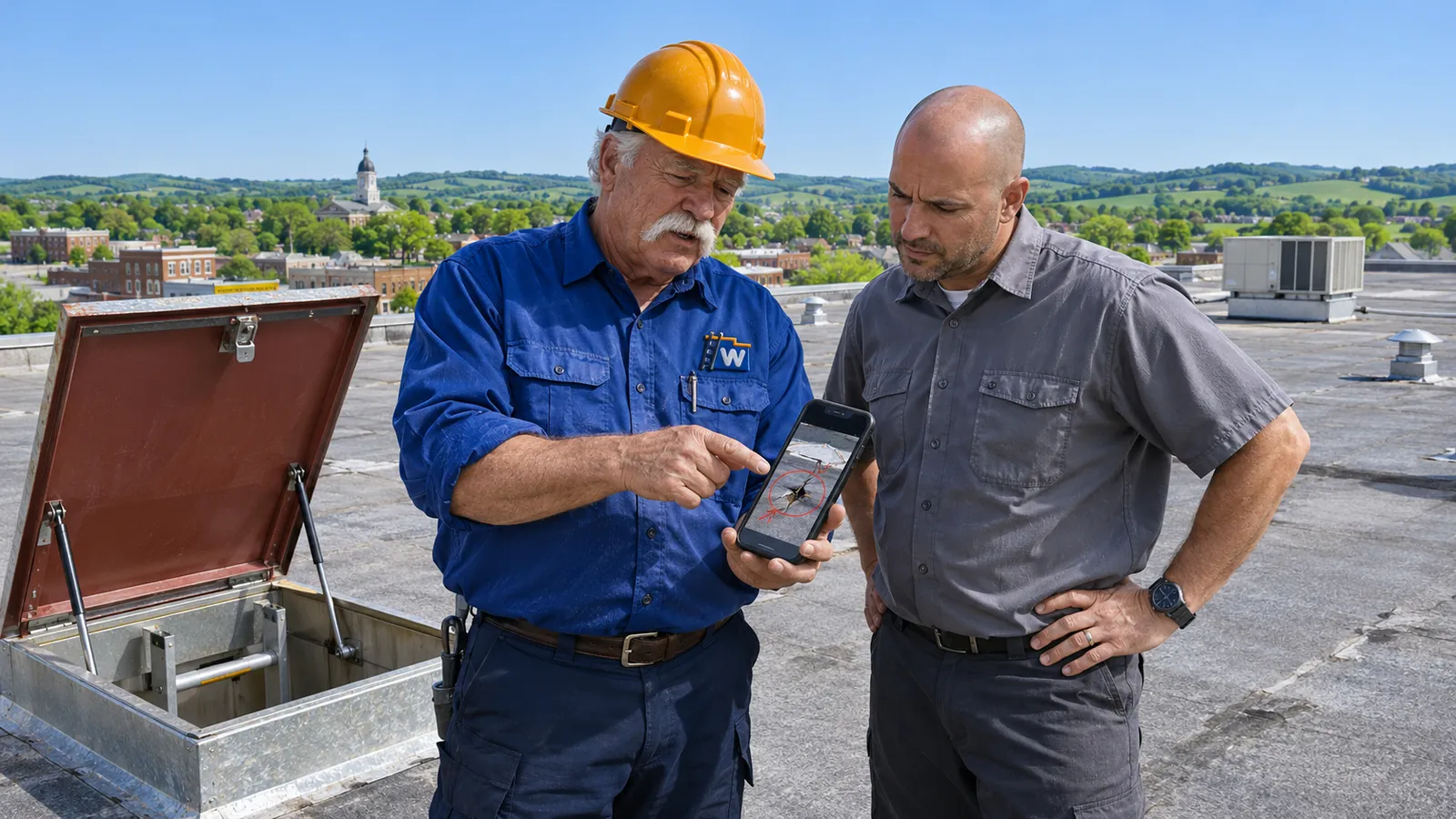
Tell us the panel type if you know it and where the drips line up. We inspect the screws, laps, and gutters and explain each repair.
Leave a name and number and we will call you about the leak or repair.
Or call now: +1 (606) 221-9220