
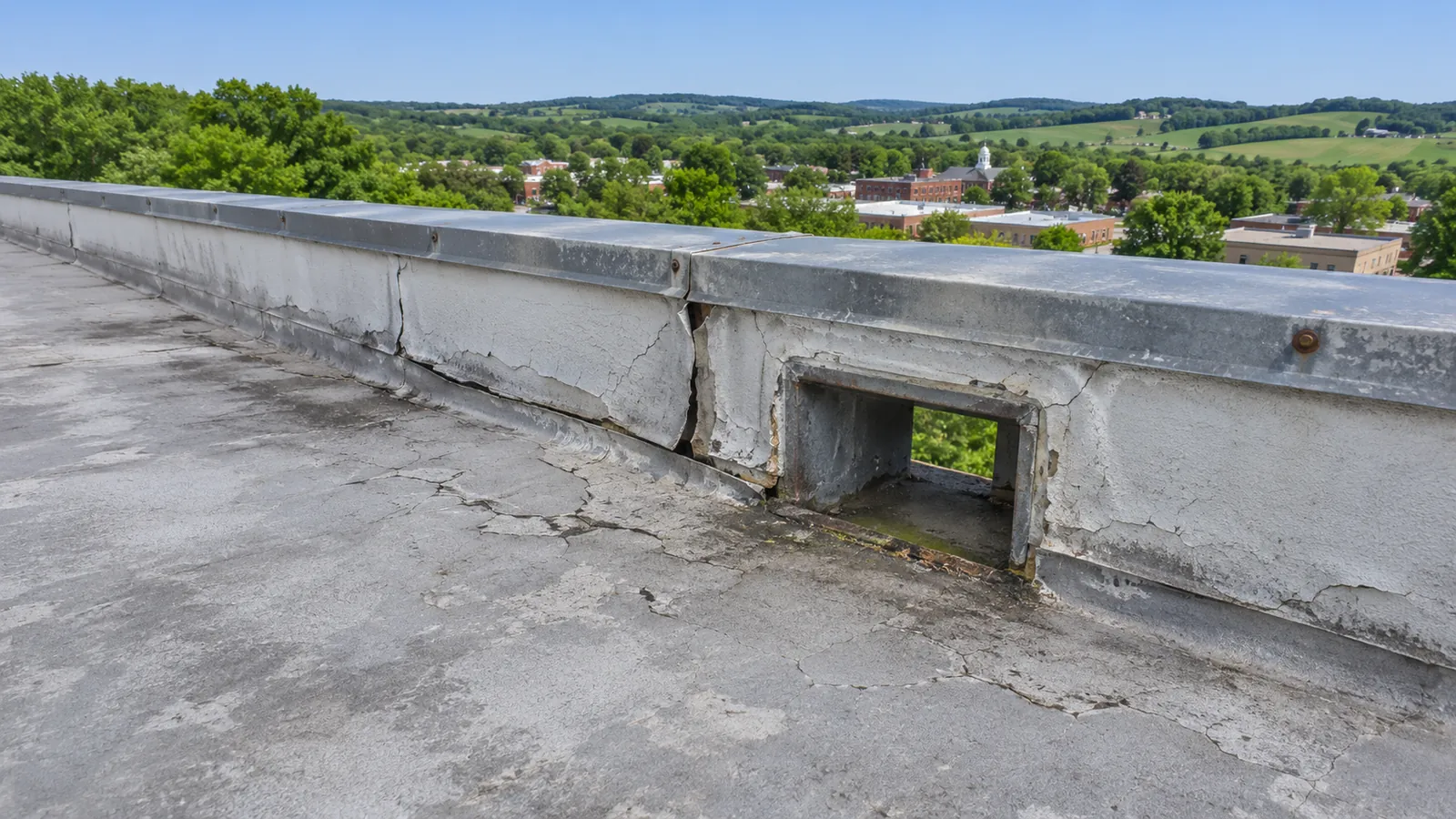
Flat Roof Repair
Open seams, blisters, and ponding on the membrane sections of a plant roof get flat roof repair.
Flat Roof Repair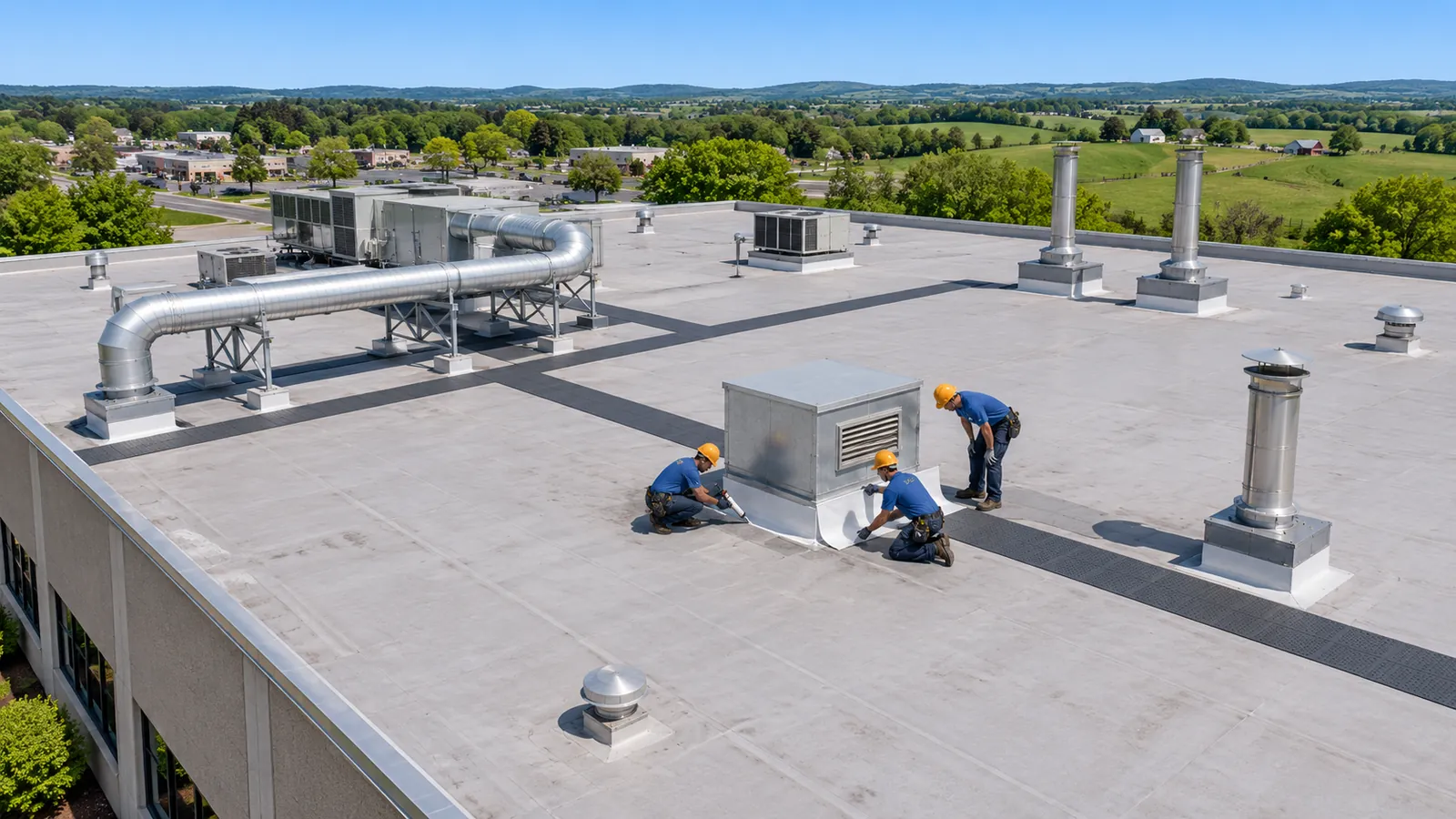
We handle Winchester industrial roof repair on operating plants, working in small sections around shifts and keeping each area watertight at day end.
Winchester industrial roof repair works section by section when damage stays local. These plant roof conditions show where repair ends.
| Roof Condition | Repair | Restore | Replace |
|---|---|---|---|
| Swollen membrane around one exhaust fan curb | Usually Fits | Rarely | Rarely |
| Crushed insulation along a maintenance path | Usually Fits | Rarely | Rarely |
| Pitch pans pulling away from steel supports | Usually Fits | Rarely | Rarely |
| Hail bruises across a large membrane field | Sometimes | Sometimes | Sometimes |
| Rusted deck under long-term leaks in one bay | Usually Fits | Rarely | Sometimes |
| Oil mist damage across most of an EPDM roof | Rarely | Rarely | Usually Fits |
Core samples confirm whether hail crushed the insulation under the membrane, which decides between patching and a larger plan.
Plant roofs wear from the inside out as well as from weather. These pairs match what staff see to what the roof shows.
Drips near a kitchen hood or machining line.
Grease, oil mist, or heat from an exhaust fan has softened, swollen, or cracked the membrane around its curb.
Leaks along the path techs walk to the units.
Insulation has crushed under repeated steps and dropped tools have punctured the sheet.
New leaks after a storm with no wind damage outside.
Hail has bruised or cracked membrane, dented panel ribs, split sealant, or holed skylights.
Drips beside structural steel or bundled conduit.
Filler in the pan around an odd-shaped penetration has shrunk and pulled away.
Flaking steel or daylight above a production bay.
Years of slow leaks have rusted deck sections that now need cutting out and replacing.
Industrial roof repairs match the exposure each part of the roof sees, from grease to heat to foot traffic.
| Repair | What It Fixes | Where It Fits |
|---|---|---|
| Exposure-rated membrane patch | Grease, oil, and heat damage at fan curbs | Around kitchen, machining, and process exhaust |
| Grease containment box | Grease running onto the roof from a hood fan | Kitchen and food plant exhaust fans |
| Walkway pads | Crushed boards and punctures on traffic paths | Routes from the roof hatch to each unit |
| Prefab boots and curbs | Shrinking pitch pans around steel and conduit | Penetrations that can take a boot instead |
| Deck section replacement | Rusted deck from long-term leaks | Bays that can be closed off below |
Repairs planned around a running plant keep production going and keep water off equipment and stock.
Working in small sections around shifts and shutdowns keeps lines open while the roof above them gets repaired.
Sealed curbs and patched fan areas keep water off machines, panels, and stored product under the roof.
Membrane rated for grease or heat, plus a sacrificial pad, keeps a fan-curb patch from failing the same way again.
Dated photos and core samples after hail give the plant a clear record when damage gets reported to an insurer.
Start from the ground: look for bent edge metal, lifted ridge caps, and new ceiling stains. Then call us to walk the whole roof.
Plant roof repairs are planned with the plant before the crew goes up.
We walk the full roof with the plant contact, marking fan curbs, traffic paths, pitch pans, hail marks, and any soft or rusted deck areas.
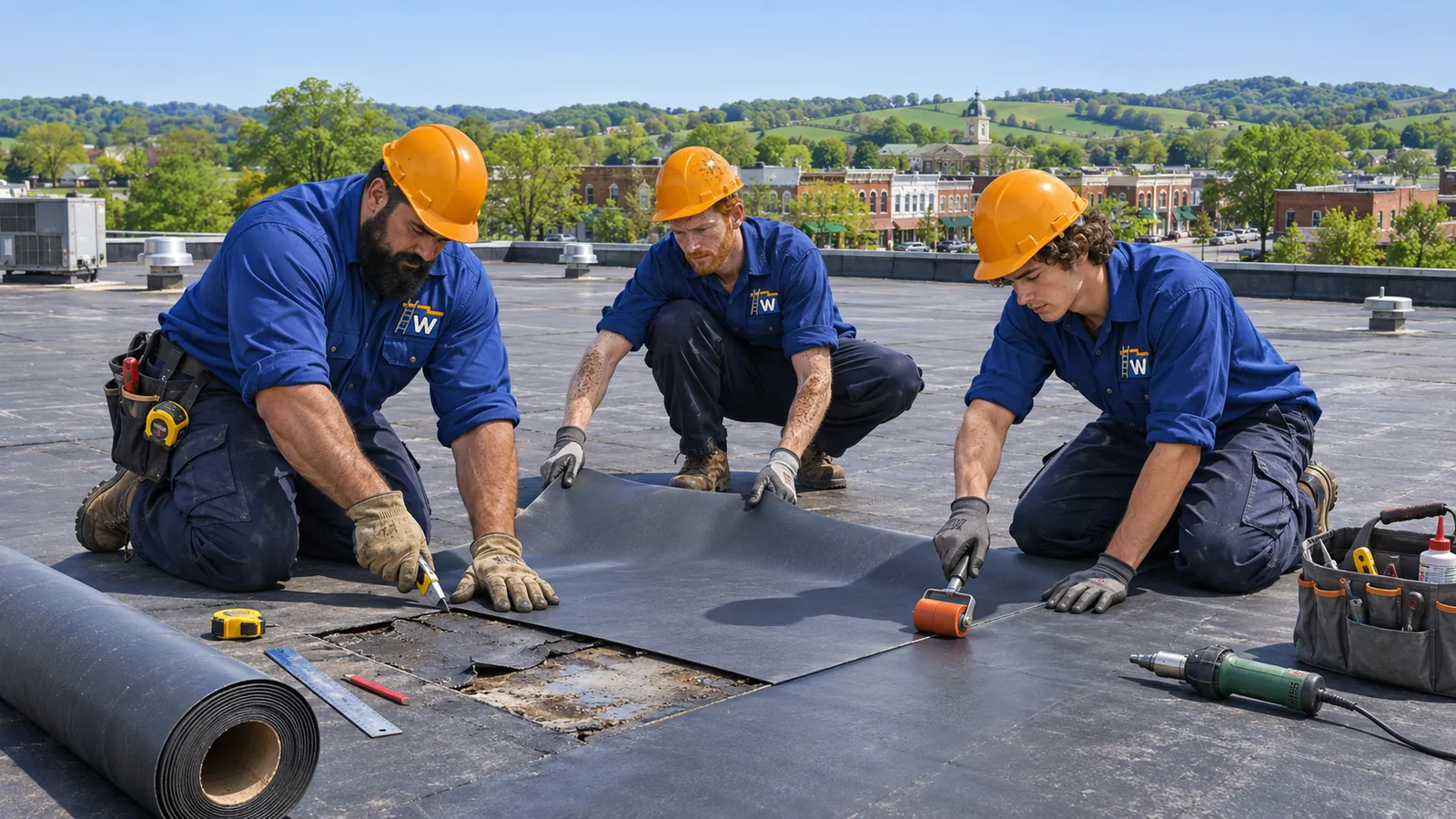
Shifts, shutdowns, lockout on units that move, hot work permits for torches, and access routes away from docks and forklifts get agreed first.
Floor areas under any deck cut-out get barricaded, and work runs in small sections so each one stays watertight at day end.
Fan areas get membrane rated for grease or heat, traffic paths get new boards and walkway pads, and pitch pans get refilled or replaced with boots.
Each repaired area gets dated photos and notes for the plant file, which helps with insurance claims and the next inspection.
Plants often carry several roof types and leaks that travel before they drip.
Open seams, blisters, and ponding on the membrane sections of a plant roof get flat roof repair.
Flat Roof Repair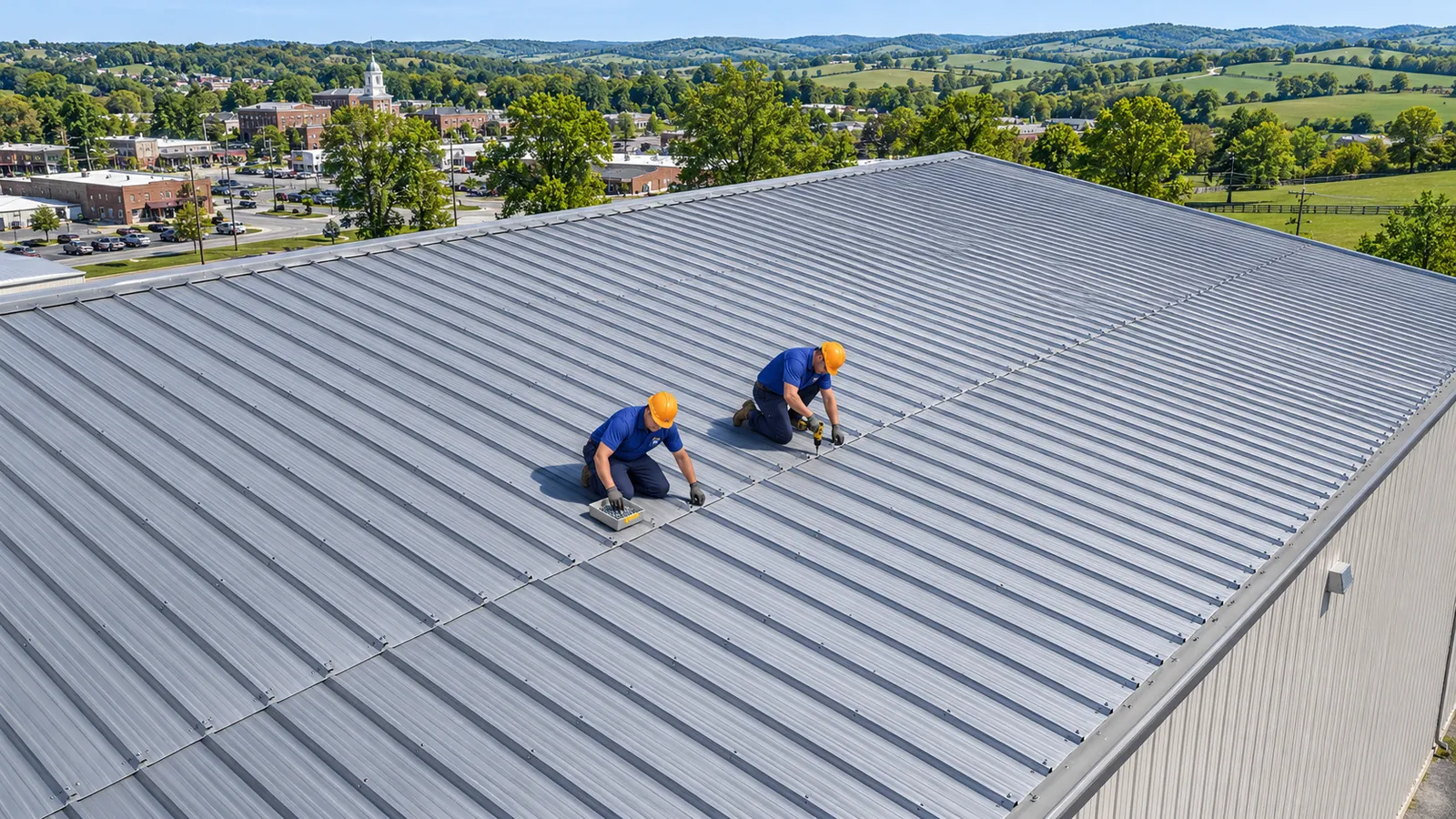
Warehouse wings and additions with screw, lap, and gutter leaks get metal roof repair.
Commercial Metal Roof Repair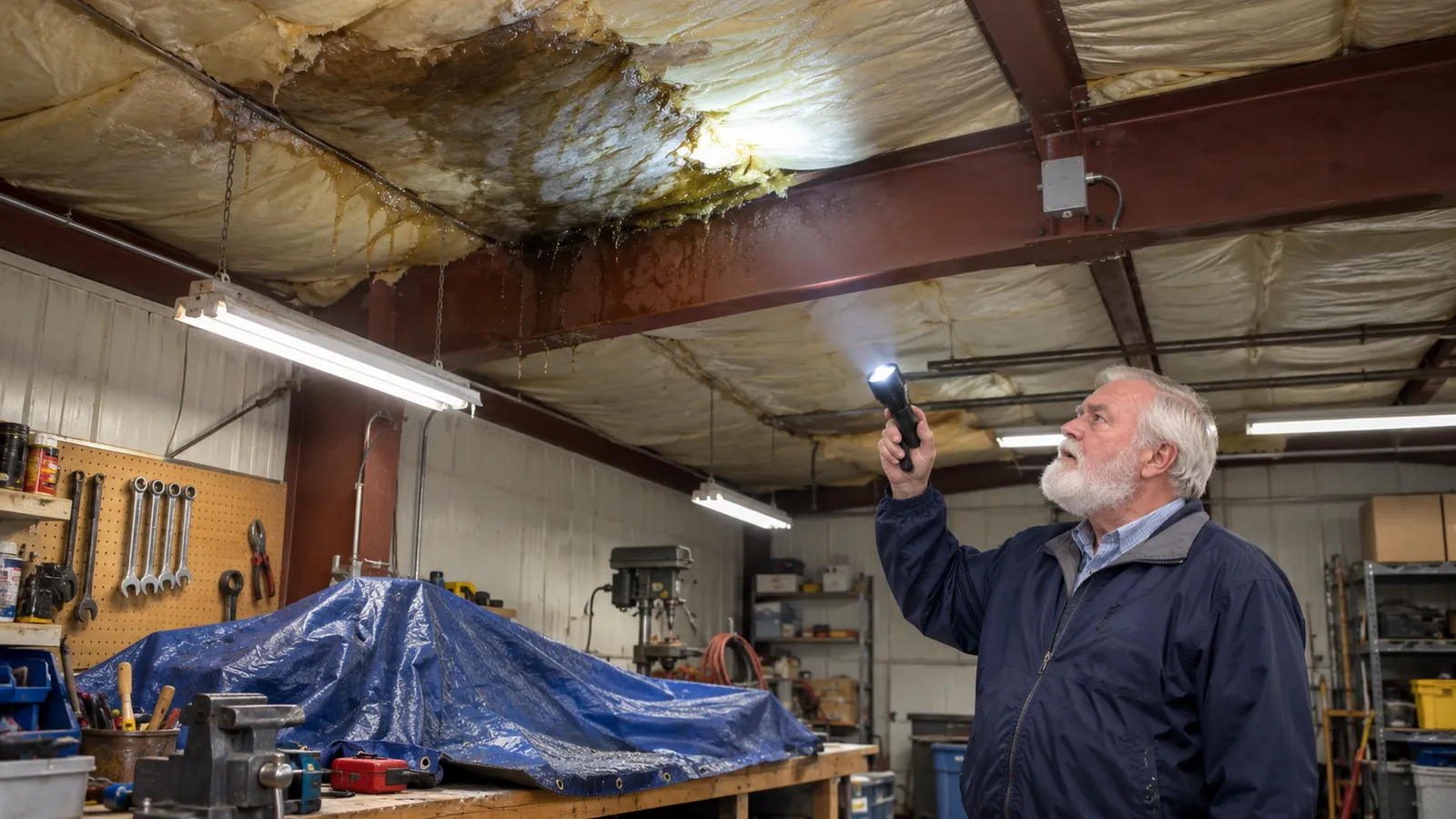
A drip over a production line with no clear source above it calls for leak tracing.
Commercial Roof Leak RepairWhat plant managers ask about repairs over running operations.
Work gets scheduled around shifts and shutdowns, done in small sections, and left watertight at the end of each day.
Before going up, the plant and crew agree on lockout for units that move, hot work permits, floor barricades under deck cut-outs, and routes that stay clear of docks and forklifts.
Fans that discharge grease, oil, or chemicals break down membrane over time, leaving soft, swollen, or cracked areas around the curb.
Kitchen grease calls for a containment box and a grease-resistant patch. Oil mist softens EPDM and asphalt roofs quickly, and process heat ages membrane near the curb. A sacrificial pad protects the new patch.
By walking the full roof and looking at edges, equipment, and the membrane surface for impact marks, tears, and lifted flashing.
Edge metal, the membrane field, panel ribs, skylights, and unit fins all get checked. Dated photos help with an insurer, and core samples show whether hail crushed the insulation.
Crushed spots and punctures get repaired, then walkway pads go down along the paths techs use most.
HVAC techs, electricians, and plant staff wear routes into the roof. New boards and patches fix the damage, and pads made for the membrane run from the hatch to each unit.
Shrunken filler comes out, fresh pourable sealer goes in, and the pan gets resealed to the roof.
Pitch pans around steel and conduit pull away over time. Where possible, crews swap them for prefabricated boots or curbs that need less upkeep, and pipe supports get new pads or rollers.
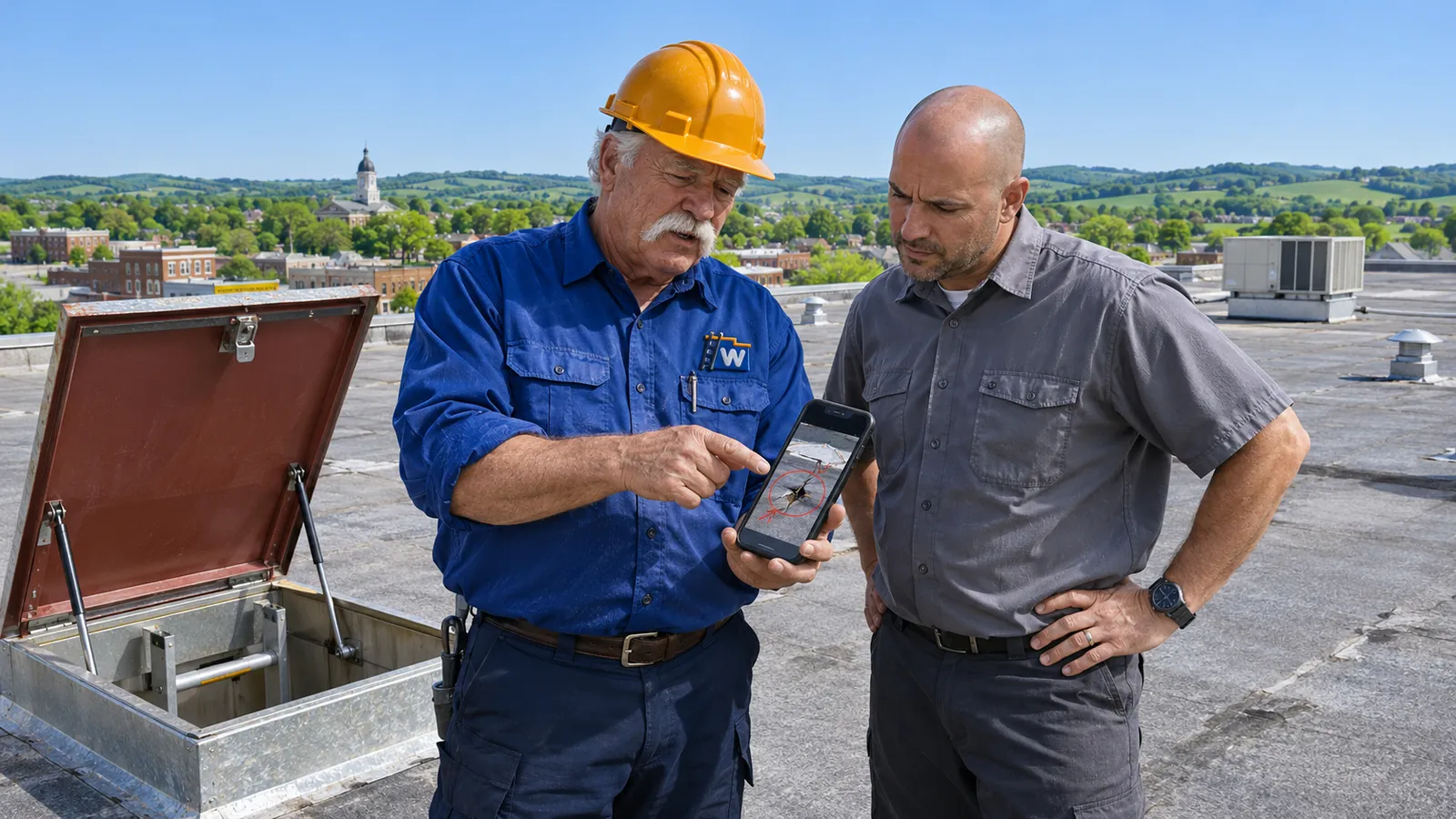
Tell us about the plant, the shifts, and where the roof is failing. We walk it with your staff and explain the repair plan.
Leave a name and number and we will call you about the leak or repair.
Or call now: +1 (606) 221-9220