
Commercial Roof Leak Repair
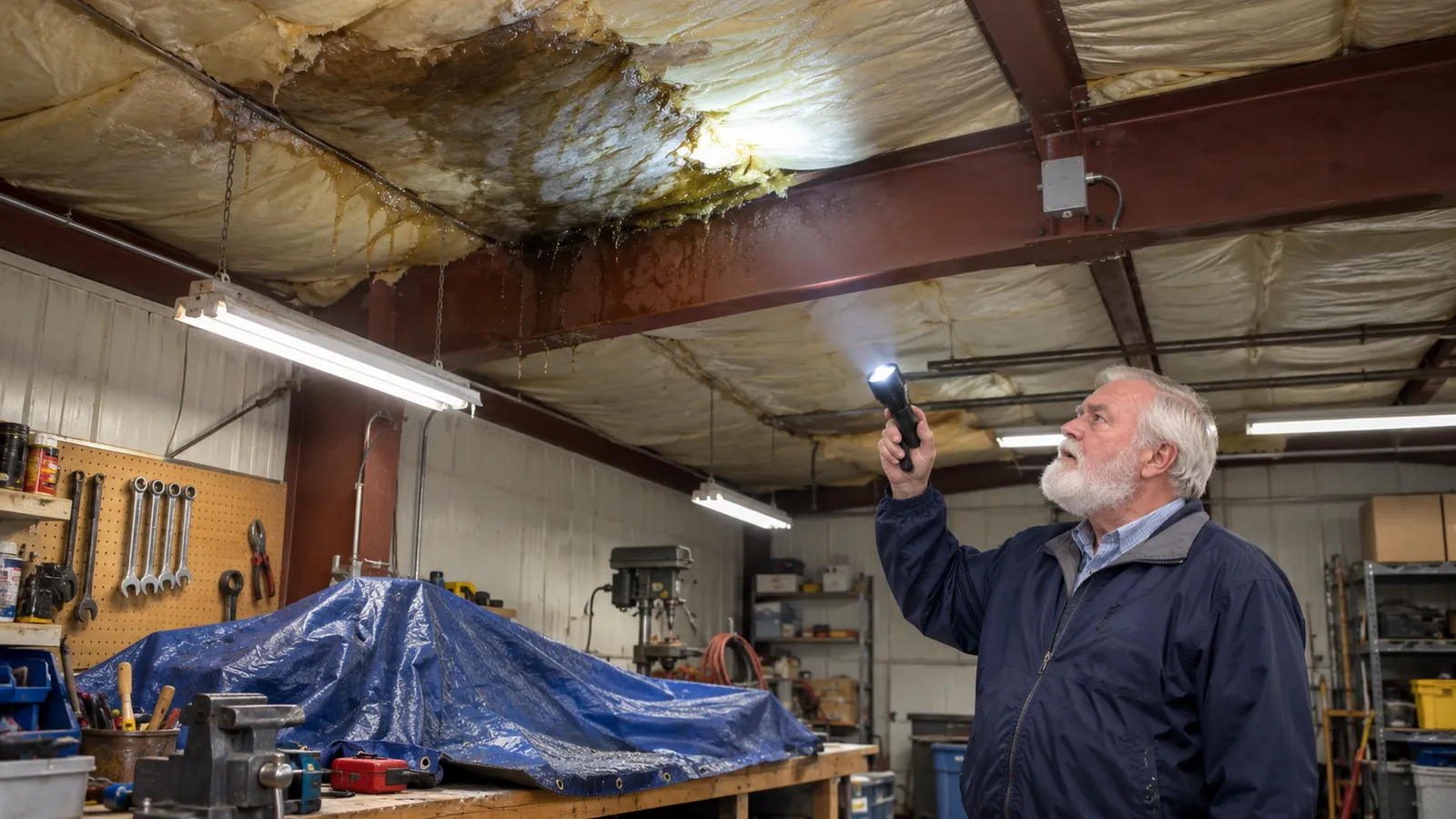
Leak tracing starts at the stain under the unit and checks the curb, the cabinet, and the condensate line before any patch.
Commercial Roof Leak Repair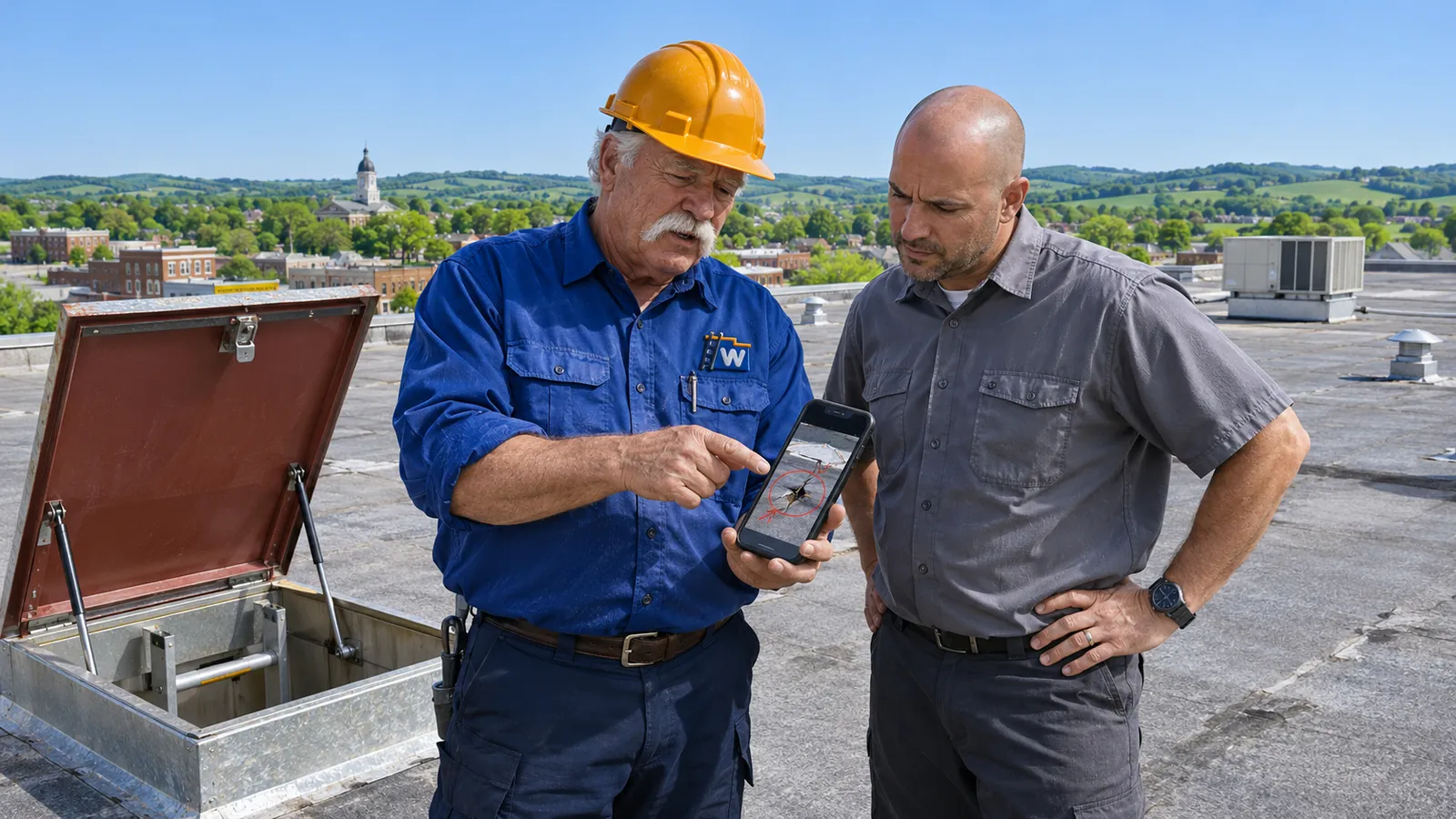
Our Mount Sterling commercial roof repair work centers on leaks at rooftop units, curbs, and vent stacks, lined up with the HVAC and plumbing trades.
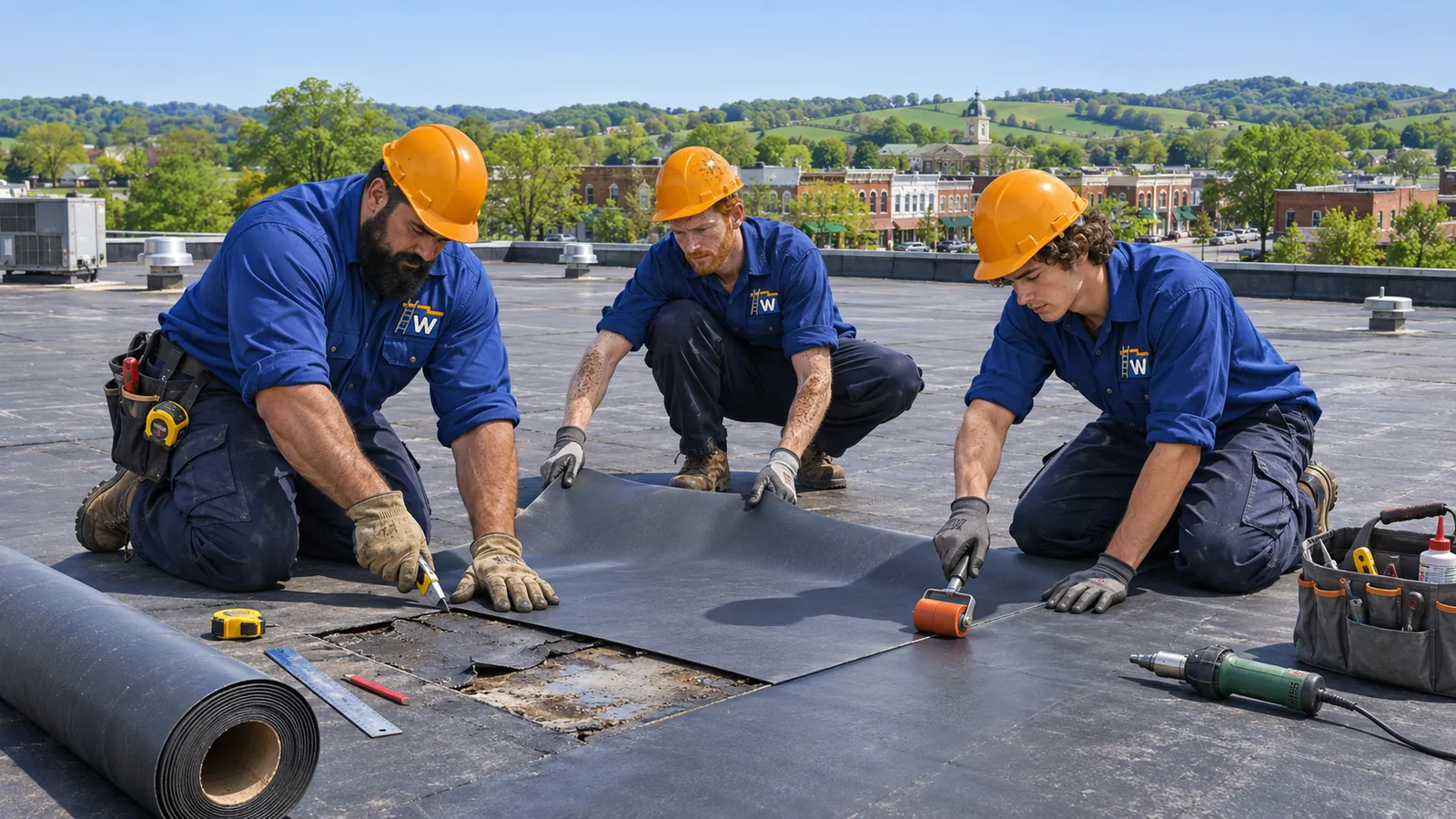
Mount Sterling commercial roof repair often starts at equipment. Condensate lines, unit gaskets, and curb adapters can all be part of a leak that looks like a roof problem from the floor below.
The Montgomery County state sheet lists an HVAC inspector, and the plumbing inspector works out of the county health department. When a repair touches a unit or a vent stack, we sort out which trade owns each part before the crew goes up.
Equipment leaks show up inside in a few typical ways. Here is what each one usually means on the roof.
Water around a diffuser after wind-driven rain.
Base flashing at the unit curb has cracked, or the curb sits too low in the insulation for flashing height.
Water dripping out of ductwork rather than the ceiling.
Loose access panels or failed unit gaskets let rain into the cabinet, and it runs down the duct.
A wet spot near a unit on dry days.
The condensate line drains onto the membrane next to the curb, and the water finds a lap.
Drips near restrooms and plumbing walls.
The boot around a vent stack has split in the sun, or the stack was moved and the boot never refit.
Stains on the uphill side of a unit.
Water piles up behind a wide curb with no cricket, and stands against the base flashing.
Sealing the roof around equipment protects both the building and the units on top of it.
Rebuilt curb flashing and fresh gaskets keep rain out of unit cabinets and the ductwork running into the building.
A new boot around each vent stack closes one of the most common openings on roofs over restrooms and kitchens.
A cricket behind a wide curb sends water around the unit toward the drains instead of against the flashing.
Sorting the roof, HVAC, and plumbing parts up front means each trade fixes its own piece once.
Every service runs in Mount Sterling. These are the ones unit leaks most often lead to.
Leak tracing starts at the stain under the unit and checks the curb, the cabinet, and the condensate line before any patch.
Commercial Roof Leak Repair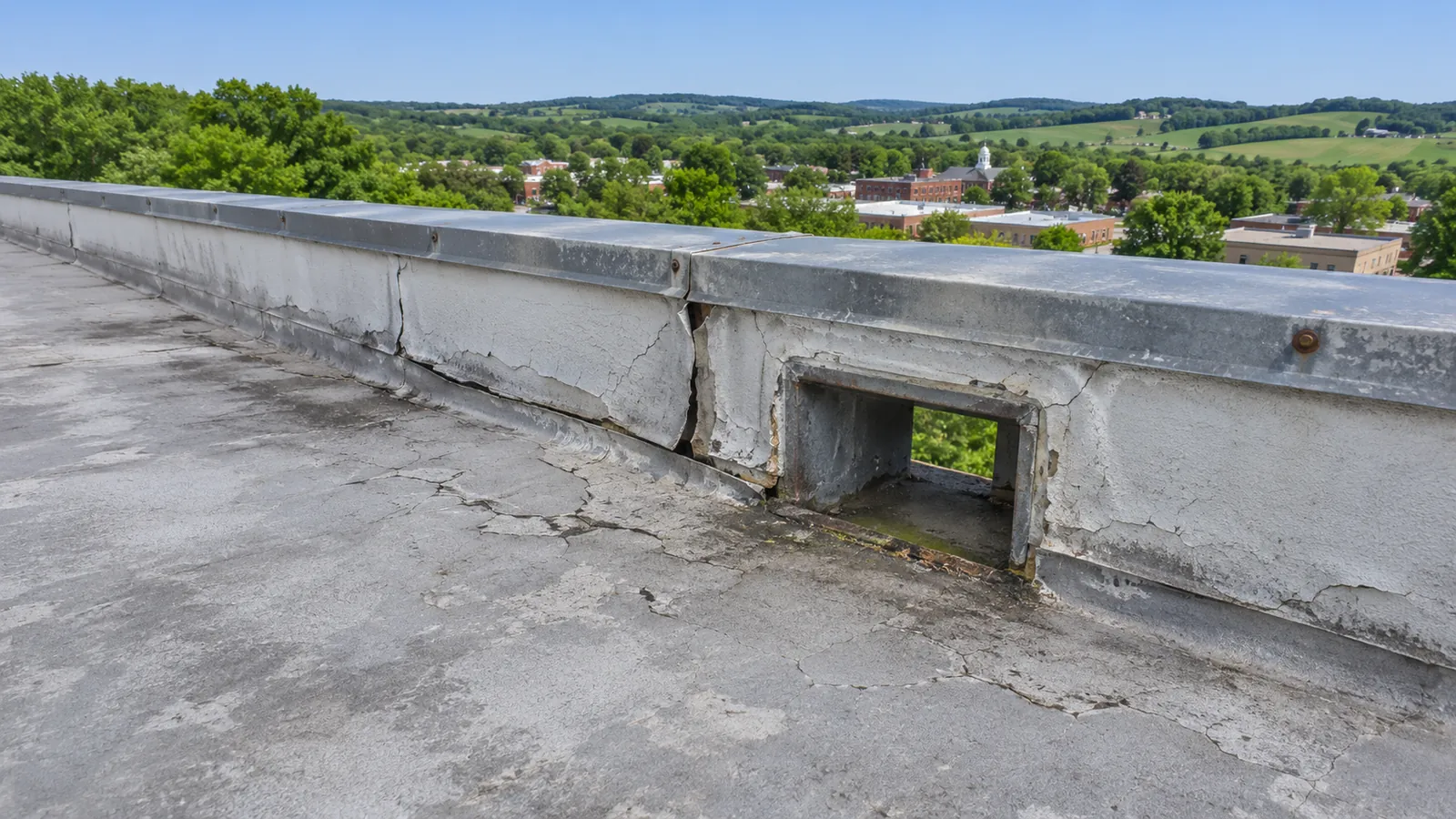
Flat roof repair covers open laps and ponding near units on TPO, EPDM, and built-up roofs over stores and offices.
Flat Roof Repair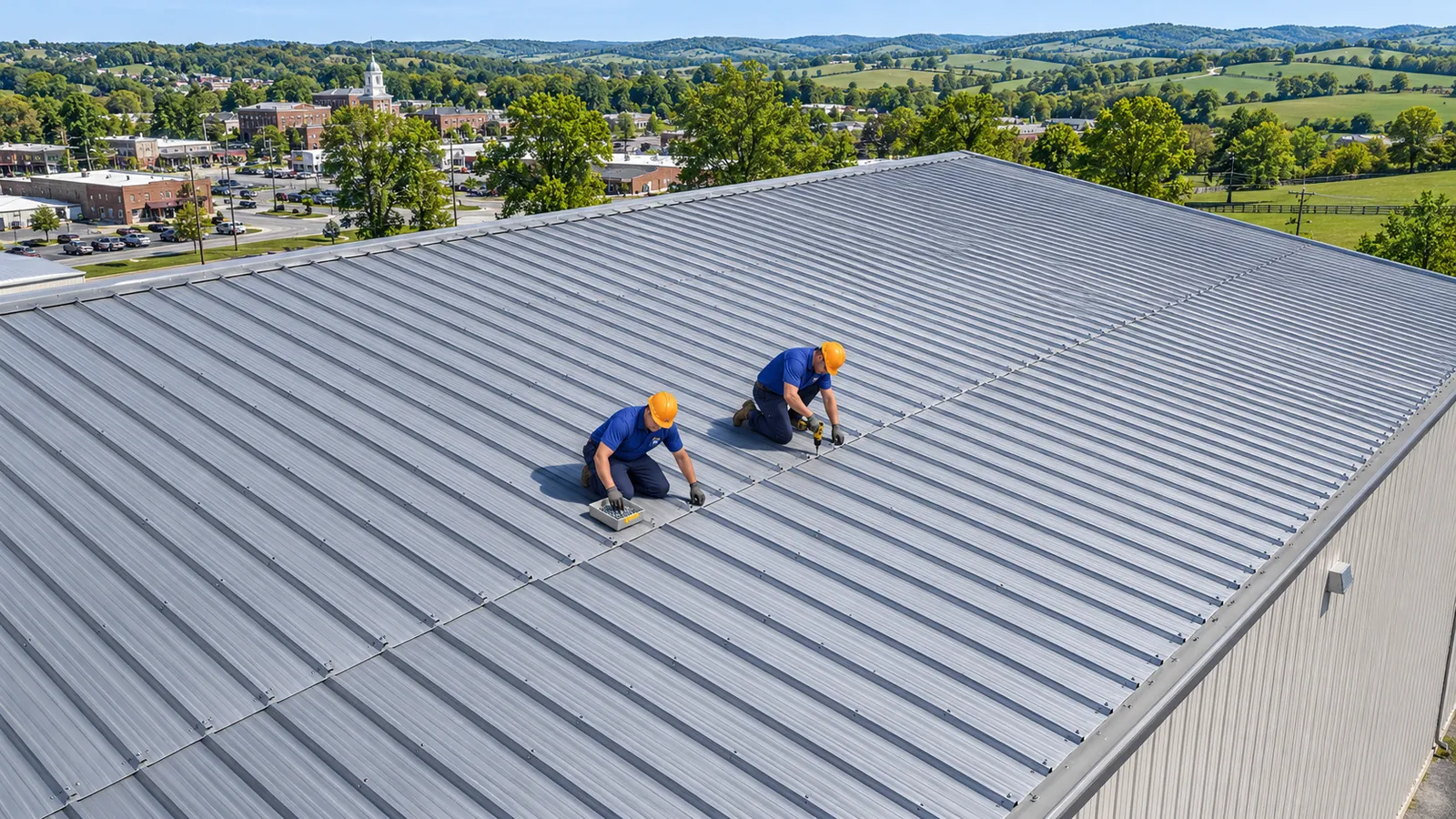
Metal roof repair seals screw lines and laps where unit supports pass through metal panels on shop buildings.
Commercial Metal Roof Repair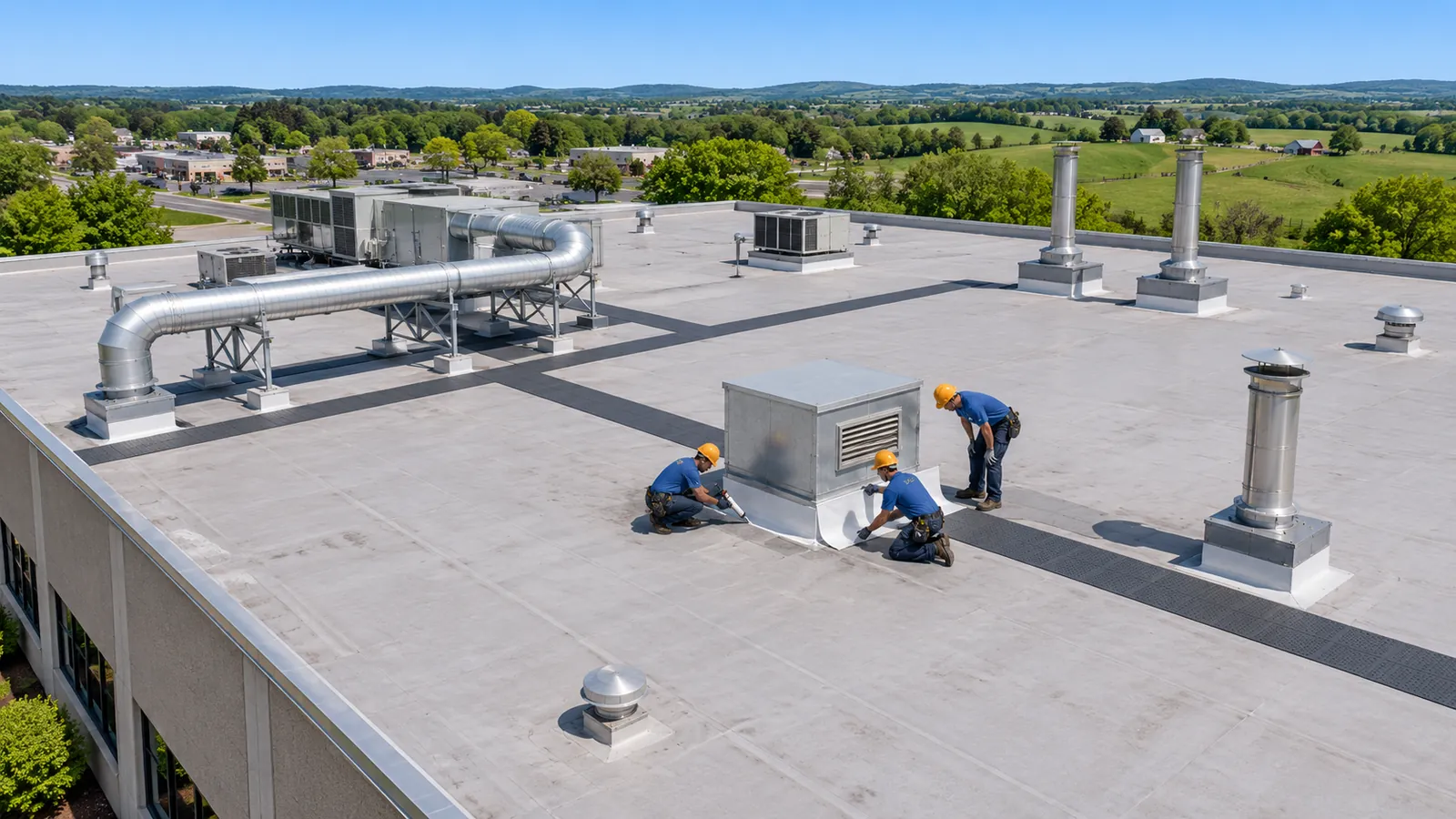
Industrial repair covers exhaust fans and process vents on plant roofs, where heat and grease break down membrane.
Industrial Roof RepairNote whether it drips on dry days or only in rain. That tells us whether to start at the condensate line or the curb.
Unit leak repairs follow an order that keeps the roof and HVAC work separate and clear.
We check the curb, counterflashing, cap, and nearby boots at each unit above the leak, plus the condensate line and any cabinet panels.
If a gasket, condensate line, or stack move belongs to HVAC or plumbing, you hear it plainly so that trade can be scheduled.
Units that need lifting or moving for reflashing get locked out with the building staff before any work starts.
Curb flashing gets rebuilt to proper height, boots get replaced, and a cricket goes in where water piles uphill.
After the next storm, the ceiling under each unit gets checked, and the curb repair is logged for future visits.
Want to know if we reach your building? Call us or send us a message. Roof repair also runs in these towns.
Home base for roof repair, with city and county permits.
Rusted laps and purlins on metal buildings, state review.
Storm-lifted edges, torn membrane, and wet deck sections.
Mast boot and conduit leaks, city or county electrical.
Eave walls, mast boots, and gutters on metal shops.
Questions owners in Mount Sterling ask about leaks around equipment.
The Montgomery County state sheet lists an HVAC inspector, and plumbing inspection runs through the county health department.
So a leak repair that touches a rooftop unit or a vent stack can involve those trades. The roofing crew handles curb flashing and boots, while moving a stack or changing a unit goes to the right trade first.
Yes, a split boot on a stack that stays in place is roofing work.
The crew removes the cracked boot, cleans the membrane or panel around the pipe, and fits a new boot sized to the stack. A stack that has to be moved, shortened, or rerouted belongs to a plumber before the boot goes on.
That pattern usually points to the condensate line instead of the roof.
Units shed condensate while cooling, and a line that drains onto the roof next to the curb can find an open lap. The fix is rerouting the line to a drain and checking the membrane where it ran.
A curb set down into thick insulation leaves too little height for base flashing to turn up and terminate.
When the flashing sits low, standing water and snow reach the top edge. The repair raises the curb or adds a curb adapter, which can need a permit and coordination with HVAC for the unit.
A unit swap is the right time to look at the curb and flashing under it.
Old curbs often carry patched flashing and shrunken sealant. Rebuilding that flashing while the unit is off saves lifting it again later, and a cricket can be added on the uphill side at the same time.
Tell us which unit or stack sits over the leak. We inspect the curb and boots and explain who fixes what.
Leave a name and number and we will call you about the leak or repair.
Or call now: +1 (606) 221-9220