
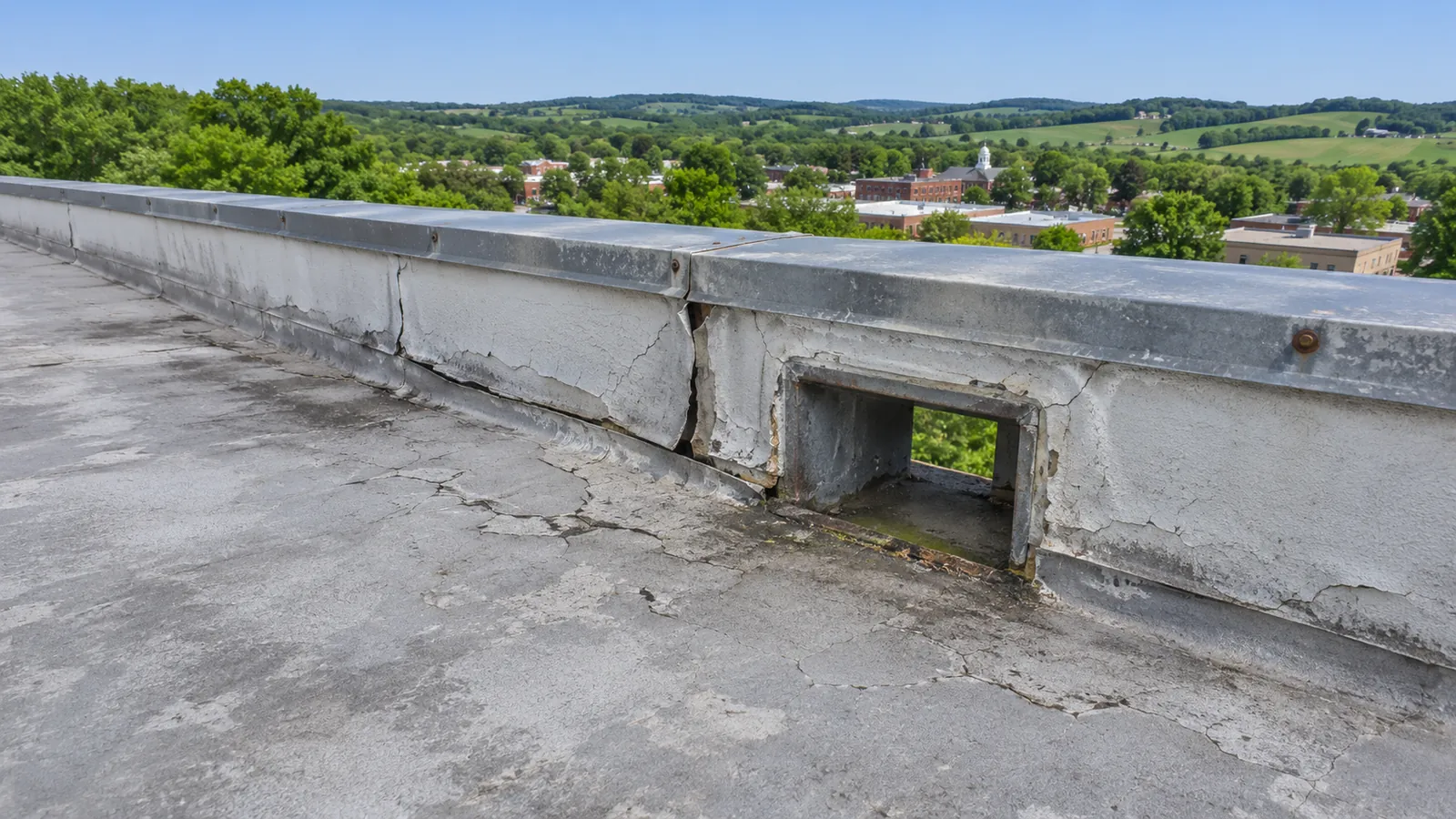
Flat Roof Repair
An open lap, a blister, or a drain that ponds sends the job to flat roof repair.
Flat Roof Repair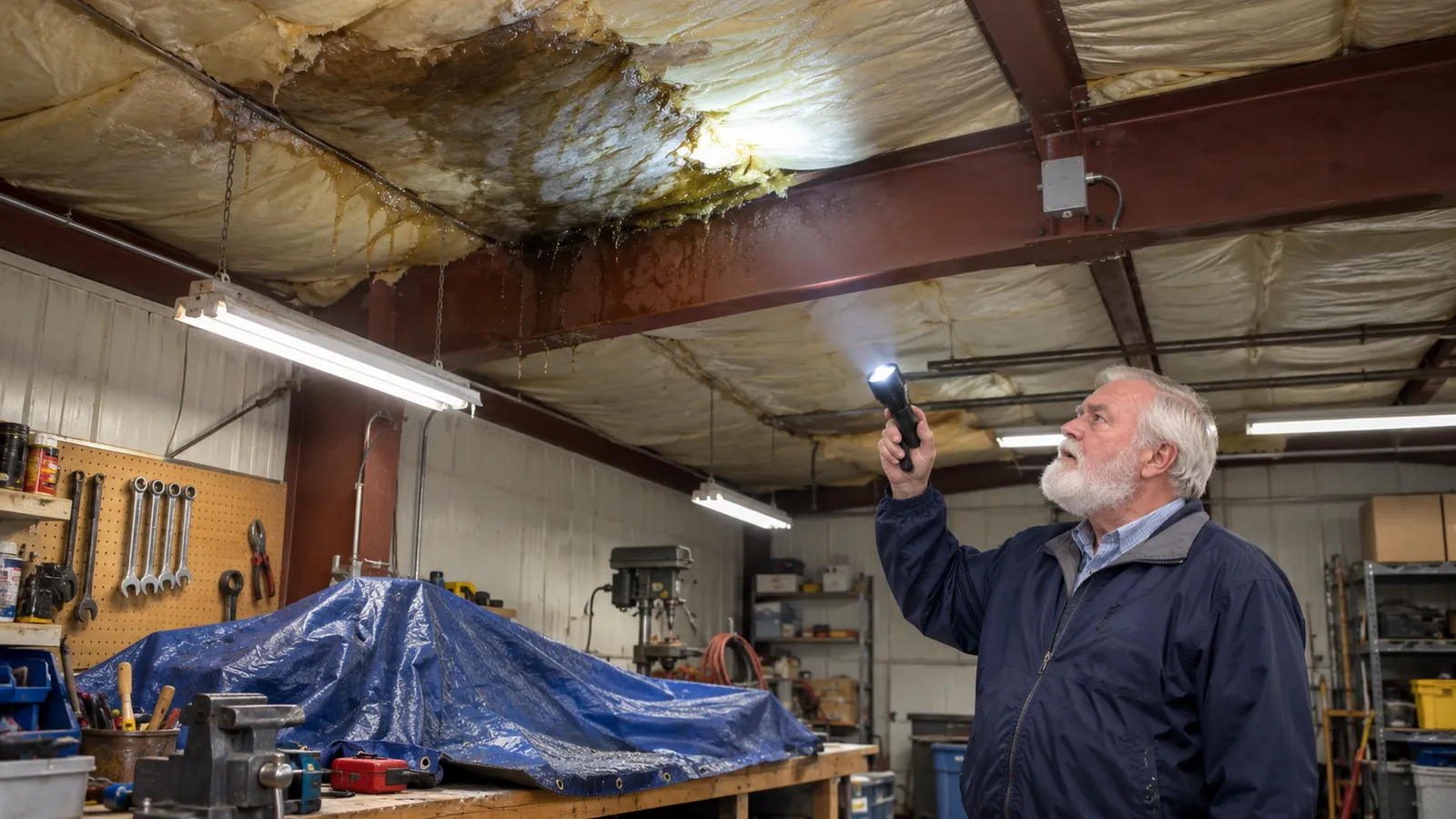
Winchester commercial roof leak repair starts at the stain inside, and we trace the water up to the curb, seam, drain, or boot letting it in.
Winchester commercial roof leak repair is usually a spot fix once the source turns up. These signs tell you when the roof needs more than one repair.
| Roof Condition | Repair | Restore | Replace |
|---|---|---|---|
| A single stain under a curb or pipe boot | Usually Fits | Rarely | Rarely |
| Leak that shows only with wind from one side | Usually Fits | Rarely | Rarely |
| Drips that appear days after the rain stops | Usually Fits | Sometimes | Rarely |
| Leaks moving to new spots after each storm | Sometimes | Usually Fits | Sometimes |
| Several stains across the building at once | Sometimes | Sometimes | Sometimes |
| Wet readings across most of the field | Rarely | Rarely | Usually Fits |
A leak that shows up days later usually means wet insulation holding water, so moisture readings come before the patch.
Where the water lands inside rarely matches where it enters. These pairs show the usual path.
Water around a diffuser or unit hanger.
Base flashing at the rooftop unit curb has split, or the curb sits too low for flashing height.
A drip near a plumbing wall or restroom.
The boot around a vent stack has cracked, or a pitch pan filler has shrunk away from its pipe.
A stain far from any curb, seam, or drain.
Water entered upslope and ran along the steel deck flutes until it found a fastener hole.
Leaks around columns only during heavy rain.
Drains, scuppers, or gutters clog and back water up over the flashing or into laps.
Water inside a unit cabinet or along its ductwork.
Loose access panels, failed gaskets, or a condensate line draining onto the roof look like a roof leak.
Once the source turns up, the repair matches the roof detail that let water in.
| Repair | What It Fixes | Where It Fits |
|---|---|---|
| Curb reflashing and cricket | Split base flashing and water piling on the uphill side | Rooftop units, hatches, and skylight curbs |
| Pipe boot or prefab curb | Cracked boots and shrunken pitch pan filler | Vent stacks, conduit, and odd-shaped supports |
| Seam and lap repair | Open membrane laps and leaking metal end laps | Seams upslope of the stain |
| Drain and scupper work | Backups over flashing during heavy rain | Strainers, scuppers, and downspout outlets |
| Wet board replacement | Insulation that holds water and drips for days | Areas the moisture meter flags around the source |
A leak fixed at its real source stops the stain from coming back and keeps the damage from spreading.
Fixing the opening instead of the ceiling tile means the same stain stops reappearing after every storm.
Each week a leak runs, more insulation soaks through, so a quick fix keeps the cut-out area small.
Stopping drips over aisles, offices, and electrical fixtures removes slip spots and keeps water off wiring.
Resealed curbs and gaskets keep water out of rooftop unit cabinets and the ductwork below them.
Photograph it, note the storm, and keep the floor under it clear. We trace it upward from the stain to the opening.
Leak tracing runs in a set order, from the stain inside to a check after the next storm.
We start at the stain inside, note which storms bring the leak, then go up and check the curbs, seams, boots, and drains above and upslope of it.

On steel decks the crew follows the flute direction, and on metal buildings the purlin line, to see where water could run before dripping.
When the source stays hidden, a hose test on one section at a time, plus moisture meter readings, narrows it to one detail.
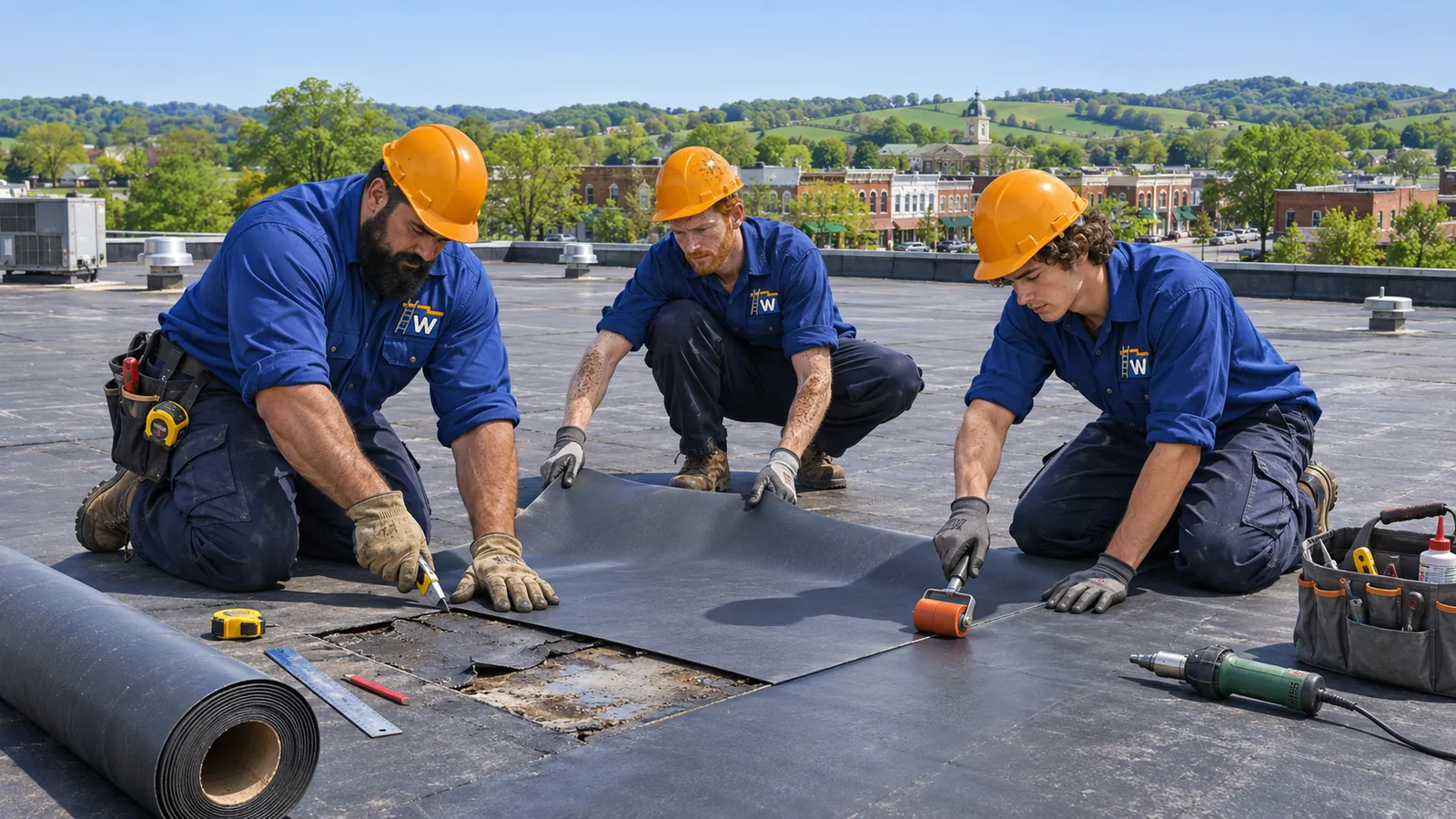
The failed curb flashing, boot, seam, or drain gets repaired with materials matched to the roof, and wet boards around it get cut out.
After the next heavy rain, the stain area inside gets checked, and building staff notes help confirm the leak has stopped.
Once the source turns up, the repair often belongs to one of these services.
An open lap, a blister, or a drain that ponds sends the job to flat roof repair.
Flat Roof Repair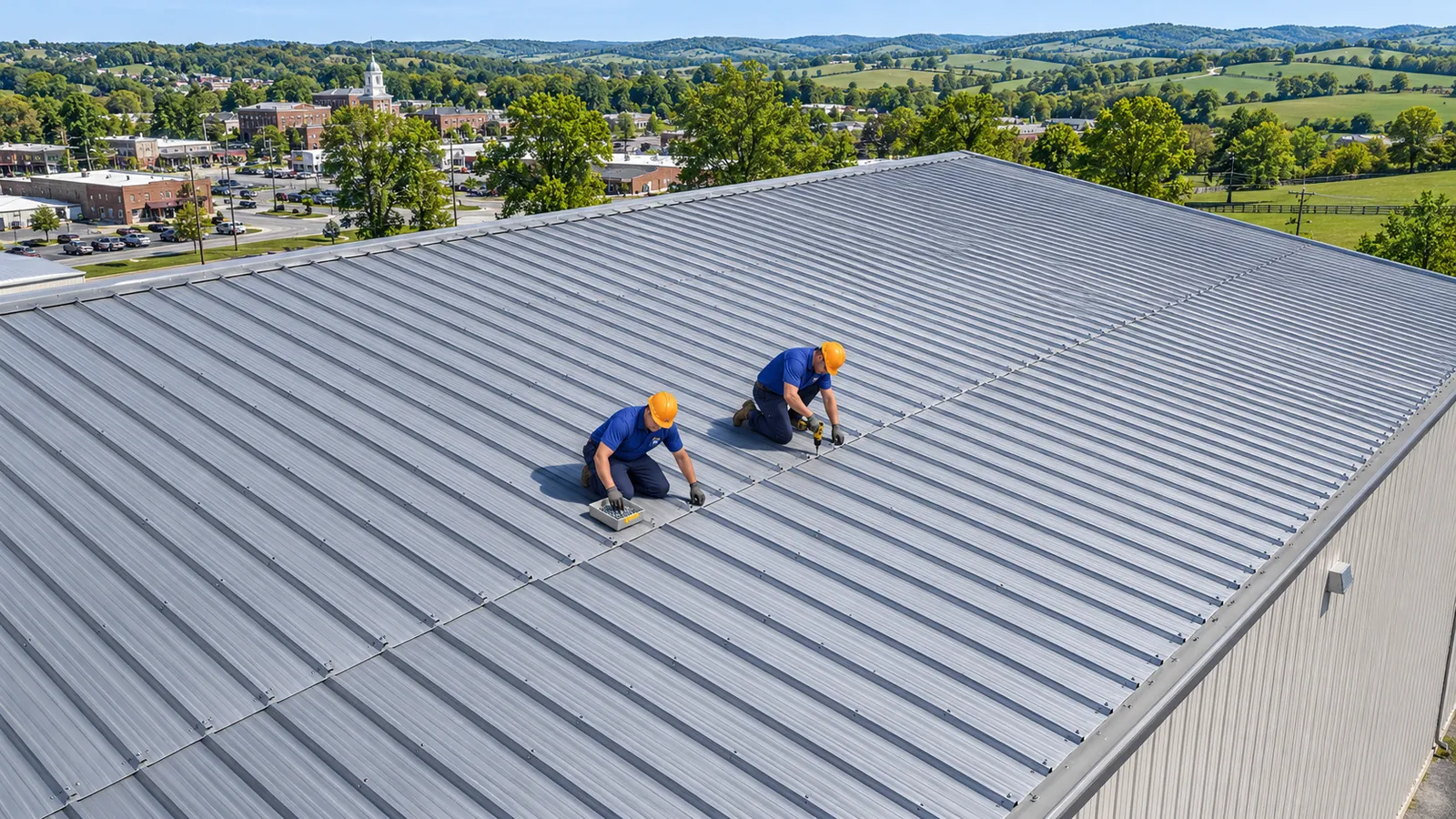
Water entering at screws, end laps, or a ridge cap on a metal building goes to metal roof repair.
Commercial Metal Roof Repair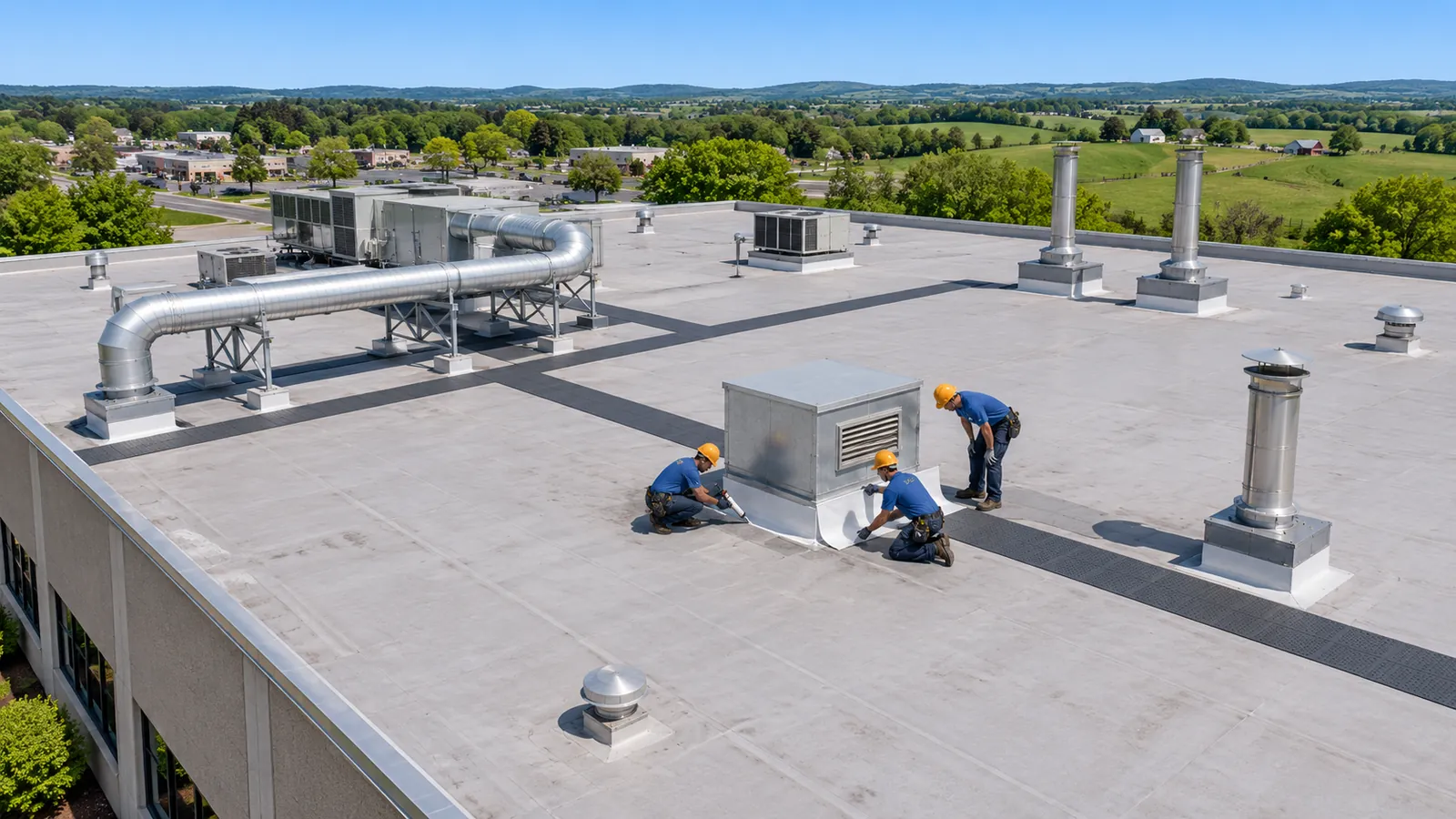
Fan curbs, pitch pans, or process vents letting water into a plant roof call for industrial repair.
Industrial Roof RepairAnswers on how leaks get traced and what to do until the repair.
By starting at the stain inside and working upward, matching it to roof details above and following the path water could take along the deck.
Curbs, seams upslope, drains, pipe boots, and skylight frames get checked first. Hose tests and moisture meters find hidden sources, and notes on which storms cause the leak narrow the search.
Each roof type has its own weak spots.
TPO and PVC leak at seam welds, corners, and boots. EPDM leaks at seam adhesive and curb flashing. Modified bitumen leaks at blisters and cap laps, gravel roofs at pitch pans, and metal at screws, laps, and ridge caps. Wall and curb flashing is a common source on every system.
Water often runs sideways along deck flutes, insulation joints, or purlins before it drips, so the stain can sit many feet from the opening.
Wet insulation also holds water and lets it go slowly, which is why some leaks appear days after rain. Tracing upslope along the deck pattern closes in on the source.
The curb flashing gets resealed or rebuilt, the cap and counterflashing get fixed, and a cricket goes in where water piles up uphill.
Units also leak through loose panels, failed gaskets, and condensate lines, so those get checked. Curbs set too low for proper flashing height and nearby pitch pans get checked as well.
Protect the inside first: move stock and equipment out of the drip zone, set buckets, and mark the spot.
Photograph the stain with the date and weather, shut off power to any fixture under it, and note which storms or wind directions make it worse. Stay off the roof during storms, since wet membrane and panels are slick.
Tell us where the stain is and which storms bring it. We trace the leak to its source and explain the repair.
Leave a name and number and we will call you about the leak or repair.
Or call now: +1 (606) 221-9220